 (Image via
There's a certain magic that happens in a room where people want to linger. Conversations flow easily, guests settle into their seats, and no one feels the urge to check their phone. That kind of warmth isn't accidental — it's designed. The way you arrange your furniture, manage sightlines, and control the acoustics of a space has a profound effect on whether people open up or shut down. If you've ever felt like your living room just doesn't "work" for gatherings, the fix might be simpler than you think.
Here's how to lay out your rooms for real, human connection.
The Problem with Most Living Room Layouts
The most common living room setup in the Western world puts a sofa facing a television, with a coffee table as a buffer zone between them. It's a layout designed for watching, not talking. When the TV becomes the visual focal point, it competes for everyone's attention and discourages eye contact — the single most important ingredient in natural conversation.
If your room is currently arranged this way, you're not alone. But with a few intentional shifts, you can transform it into a space where people genuinely connect.
Start with the Conversation Circle
The foundation of any social room layout is what interior designers call a conversation grouping — furniture arranged so that seated people can comfortably make eye contact and hear one another without raising their voices.
The golden rule: no seat should be more than 8 feet from another. Beyond that distance, conversation starts to feel like a shouting match. Aim for 4 to 8 feet between facing seats. This is close enough for intimacy without feeling cramped.
A classic conversation circle includes a sofa, two accent chairs, and a low coffee table or ottoman at the center. The table gives people somewhere to set a drink, lean forward during an engaging exchange, or rest their elbows — all natural gestures of engaged conversation.
For larger rooms, don't try to fill every corner. Instead, create two or more distinct conversation zones. A pair of chairs by a window forms a perfect spot for one-on-one conversation. A sectional sofa in the main area handles the group. These pockets of seating give people choices and make a large room feel inviting rather than cavernous.
Angle Everything Slightly Inward
Furniture that lines the walls might make a room look tidy and spacious on paper, but it's terrible for socializing. When people sit with their backs against opposite walls, they're too far apart and the arrangement feels formal and awkward — like a waiting room.
Instead, float your furniture away from the walls and angle pieces slightly toward the center of the room. Even pulling a sofa 18 inches away from the wall and turning two chairs at a slight angle creates an immediate sense of intimacy. The room says come in, sit down, stay a while.
Choose the Right Focal Point
Every room needs a focal point — something the eye naturally gravitates toward. In a social space, the best focal points are things that invite comment or admiration: a fireplace, a large window with a view, a piece of art, a beautiful bookcase, or an interesting rug.
If you do have a TV in the room, consider mounting it on a swivel bracket so it can be tucked away or angled off to the side during gatherings. Alternatively, design the room around the fireplace or a key architectural feature, and treat the TV as a secondary element rather than the centerpiece.
The Role of the Coffee Table
The coffee table is one of the most underestimated tools in social design. It serves as a communal anchor — a shared surface that subtly draws people into a circle. When choosing a coffee table for a social space, keep a few things in mind.
An ottoman-style coffee table is particularly social-friendly. It feels less like a barrier and more like a shared piece of furniture. Guests can perch on it, prop their feet up, or gather around it more naturally than around a hard-edged table.
Keep the height consistent with seat cushions — roughly 16 to 18 inches — so that leaning forward to pick up a glass or gesture during a story feels natural rather than awkward.
Don't Underestimate Lighting
Lighting has an enormous influence on mood and, by extension, on conversation. Bright overhead lighting tends to feel interrogative and clinical. Warm, layered lighting — floor lamps, table lamps, candles, or dimmable fixtures — creates the soft glow associated with relaxation and openness.
For social spaces, aim for lighting that illuminates faces without creating harsh shadows. Lamps positioned at seated eye level work beautifully. Dimmers are one of the best investments you can make for any gathering space, allowing you to shift the room's mood from lively and vibrant early in an evening to warm and intimate as the night winds down.
Sound and Acoustics Matter More Than You Think
A room that echoes, or one that absorbs too much sound into dead silence, can make conversation feel exhausting. Hard floors, bare walls, and high ceilings create echo that forces people to raise their voices, which ironically makes it feel louder and harder to hear. Soft furnishings — rugs, upholstered seating, curtains, cushions, and bookshelves filled with books — absorb sound and create what acousticians call a "live but not lively" environment: perfect for comfortable conversation.
If you have an open-plan space, a large area rug is one of the most effective tools for defining a conversation zone acoustically as well as visually.
Paths and Flow: Let People Move Freely
A social room should allow guests to circulate without feeling like they're navigating an obstacle course. Leave at least 30 to 36 inches of clear walkway through main traffic paths, and 18 inches of clearance around furniture. When people can move easily, they mingle. When they feel trapped in one spot, the energy stagnates.
This is especially important in dining rooms and kitchens, where gatherings often naturally migrate. Pull bar stools up to a kitchen island, leave room behind dining chairs to push back and stand, and consider a round dining table if space allows — round tables eliminate the "head of the table" dynamic and make every seat feel equally social.
Bringing It All Together: A Room-by-Room Summary
Living Room: Float the sofa away from walls, create a clear conversation circle within 8 feet, choose a non-TV focal point, and layer your lighting with warm lamps.
Dining Room: A round or oval table encourages equal conversation. Keep chairs accessible and the table at a comfortable height (28 to 30 inches). Add a dimmer to the overhead fixture.
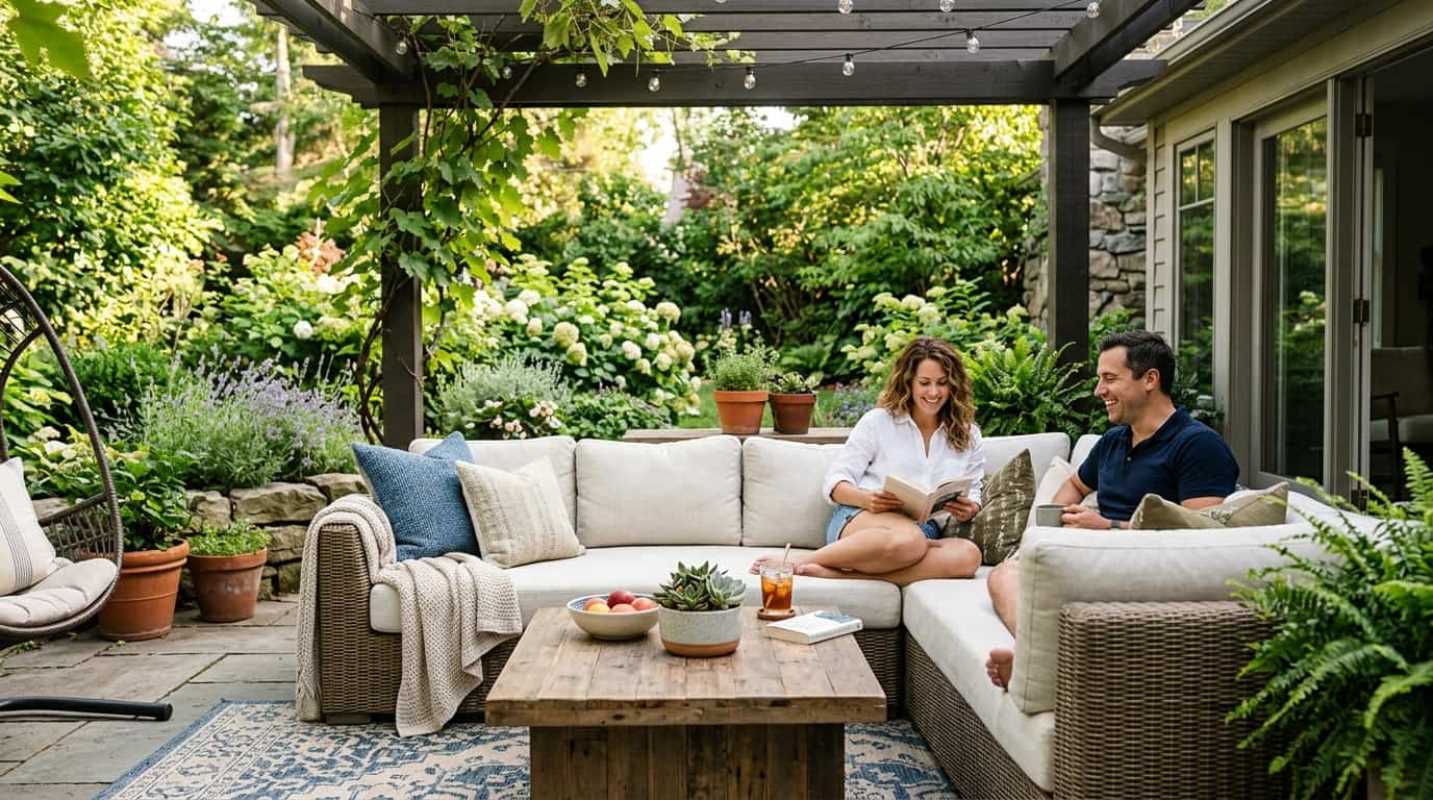
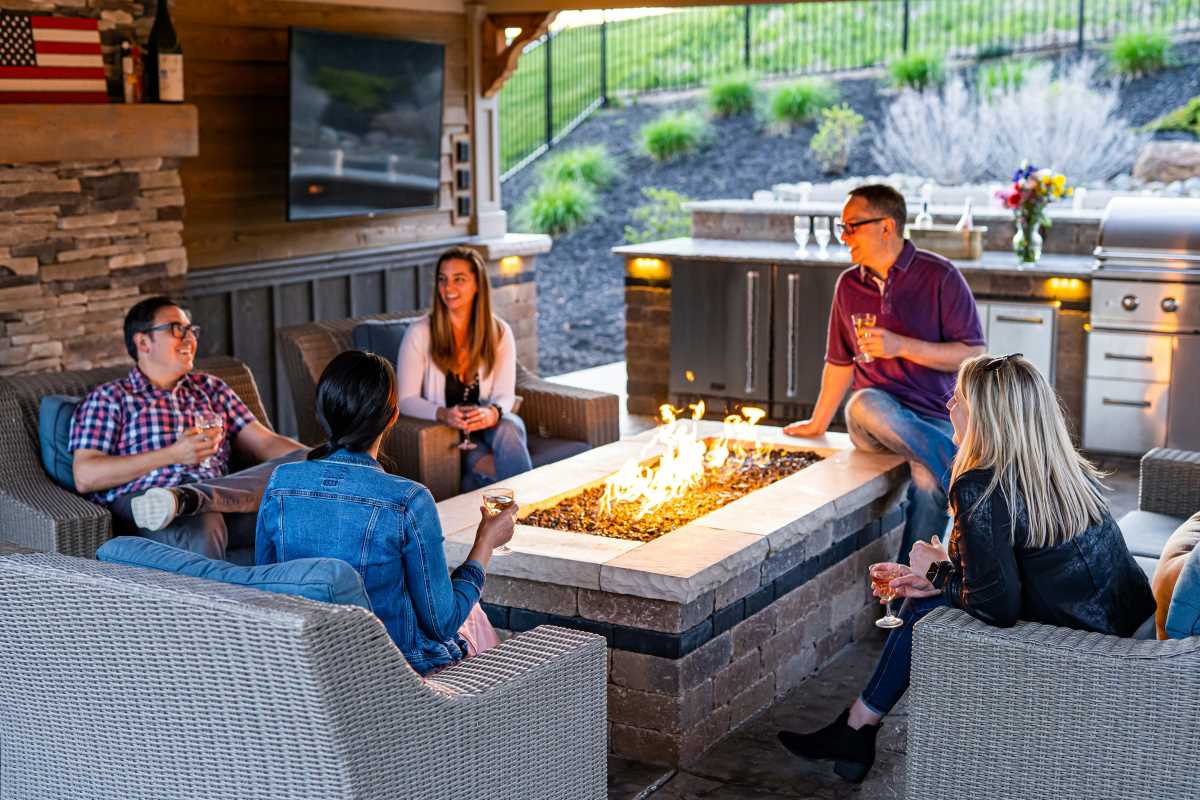
Outdoor Spaces: Apply the same principles outside. Cluster seating around a fire pit, outdoor table, or low coffee table. Avoid long rows of chairs facing the same direction, which creates a spectator arrangement rather than a social one.
Open-Plan Spaces: Use rugs to define zones, furniture to create soft dividers, and lighting to signal "this is the conversation spot."