Picture a typical weekday morning in your home. You are packing a lunchbox with one hand, hunting for a missing soccer shin guard with the other, and tying your seven-year-old child's shoes while shouting that everyone needs to get in the car.
Most parents slip into this routine naturally. You step in because you are in a rush, because it is easier, or because you want your child to have an easy morning. But when you do everything for your kids, you inadvertently take away their chance to figure out how the world works.
Child development research points to a clear trend: kids are facing an independence shortage. Dr. Peter Gray and other researchers found that the multi-decade decline in independent childhood activities directly matches the modern rise in anxiety and depression.¹ When children do not get real-world autonomy, they miss out on developing an internal locus of control. The American Academy of Pediatrics warns parents against dropping basic household responsibilities just because kids have crowded homework and soccer schedules.²
Moving from "doing for" your child to "helping them to do" takes practice. Here is a clear roadmap to teach practical life skills from toddlerhood through the high school launch.
The Foundation for Toddlers and Preschoolers (Ages 2-5)
Toddlers possess an innate drive to be involved. When you sweep the kitchen, your three-year-old wants the broom. Tap into that natural curiosity early, even when their help creates a little extra friction.
At this age, focus on simple self-care routines, motor control, and household contribution
• Dressing and shoes: Teach them to pull pants up and down, put on socks, and slip into velcro shoes. It will take ten minutes at first, so start earlier.
• Personal hygiene: Guide them to wash and dry their hands after bathroom trips, wipe their faces with a damp cloth, and brush teeth (with you doing a final polish).
• Toy clean-up: Keep toy bins low and clearly labeled with pictures. Make returning blocks to their specific bin part of regular play routines.
• Sorting laundry: Have your child match socks by color or carry their dirty clothes directly to the laundry hamper.
• Kitchen contribution: Let them wipe small spills using a washcloth, tear lettuce for dinner, and carry plastic cups to the sink after meals.
Play-based practice builds the motor control and confidence they need for bigger jobs later. When you let a four-year-old pour their own water from a small pitcher, you show them that you trust their physical capabilities.
Developing Competence in the Elementary Years (Ages 6-12)
Once elementary school starts, kids can manage multi-step sequences. This stage bridges early self-care with real household citizenship and time management.
Instead of managing your child's schedule like an administrative assistant, hand over the reins gradually
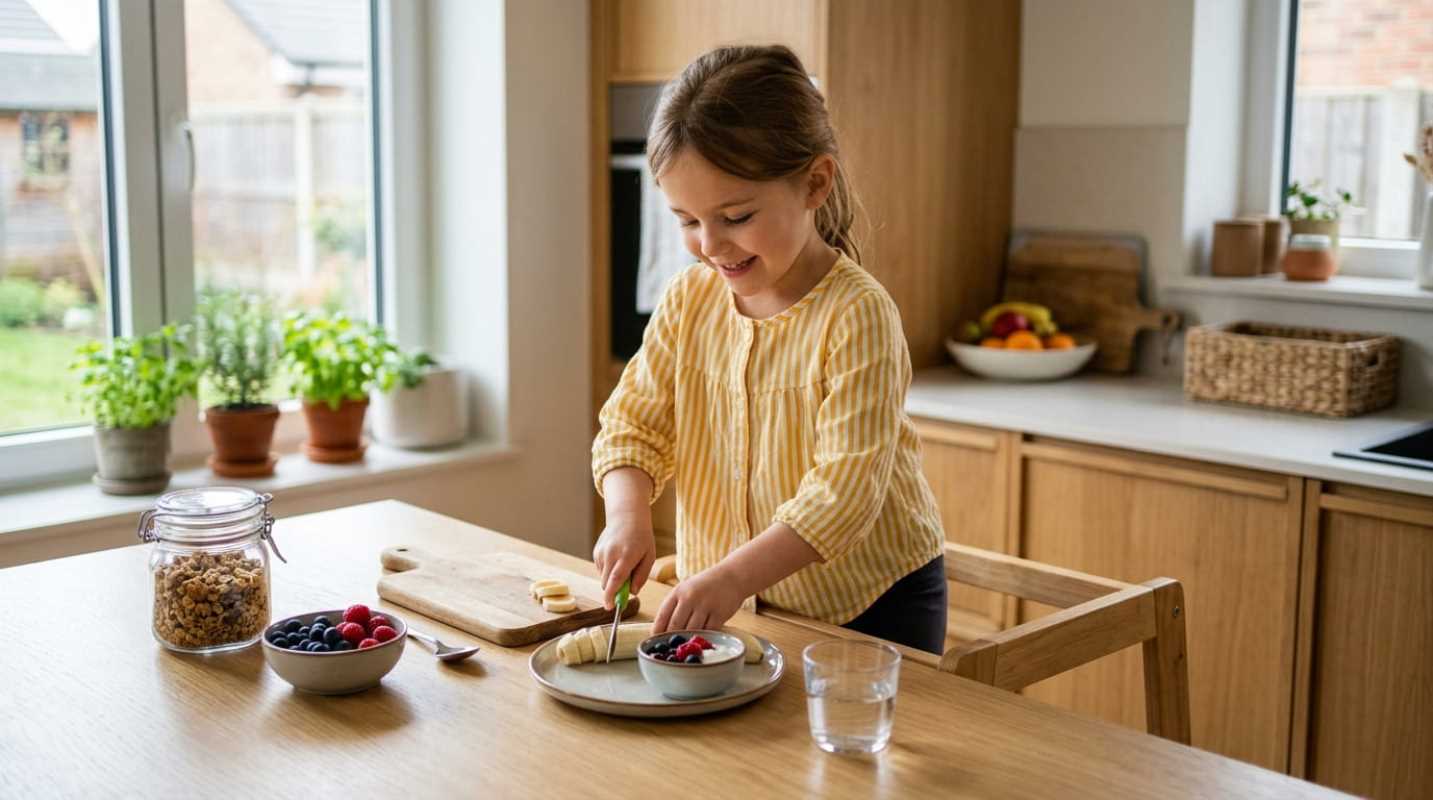
• Basic meal prep: Kids in early elementary can make toast, spread peanut butter, peel fruit, and pour milk. By age nine or ten, teach them how to pack a balanced school lunch and safely use small appliances like a toaster or rice cooker.
• Morning autonomy: Give your child an alarm clock instead of acting as their personal wake-up service. Let them manage their morning checklist so they get dressed and pack their backpack without constant verbal reminders.
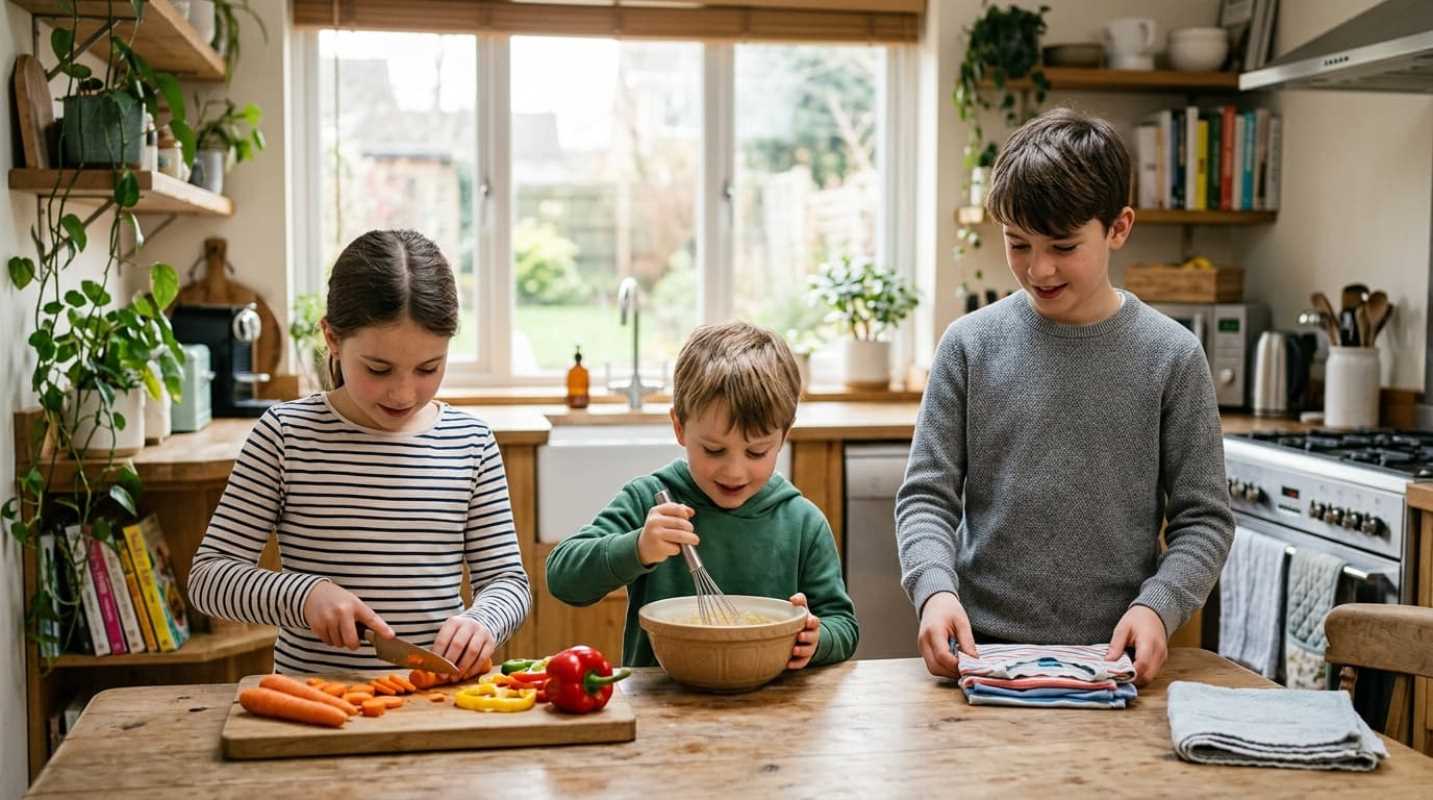
• Laundry and domestic chores: Elementary students can strip their bed sheets, vacuum living areas, sweep with a dustpan, and run the dishwasher from start to finish.
• Money management: Introduce a small allowance for personal discretionary spending. Let them pay a store cashier in person and count change. Making a mistake with five dollars at age eight prevents a catastrophe with five hundred dollars later.
• Neighborhood navigation: Allow your child to walk to a neighborhood park, bike to a nearby friend's home, or run an errand at the corner store.³ Letting kids move outside adult eyesight builds self-assurance that structured activities cannot match.
Preparing for Launch in the Teenage Years (Ages 13-18)
During the teenage years, your parenting role shifts from direct supervisor to trusted mentor. If your teenager heads to college or enters the workforce without knowing how to boil an egg or call a doctor, they face unnecessary stress.
Focus on turning over complete ownership of personal logistics, finances, and domestic maintenance
• Independent cooking: Have your teen take full responsibility for planning, shopping for, and cooking one family meal each week.
• Home maintenance: Teach them practical repair skills like plunging a clogged toilet, turning off the main water valve, and resetting a tripped circuit breaker.
• Healthcare management: When your teen turns sixteen, have them call the clinic to book their own dentist and doctor appointments. Teach them to read prescription labels and talk directly to their doctor during appointments.
• Financial literacy: Help them open a checking account with a debit card. Teach them how to track their balance on a mobile app, file simple tax forms for a summer job, and calculate interest rates.
• Car care and transit: Teens should know how to check engine oil, change a flat tire, jump-start a dead battery, and handle regional public transit routes.
• Digital habits: Guide your teen to set boundaries for device-free sleep routines and spot digital scams, phishing emails, and predatory online situations.
Top Recommendations for Teaching Life Skills
Teaching these skills requires patience and structure. You can make the transition smooth by adopting a few tested parenting methods
1. Use the scaffolding model: Start with "I do, you watch." Move to "we do together." Finish with "you do, I watch." Breaking complex tasks into discrete steps keeps kids from feeling overwhelmed.
2. Decouple chores from money: Treat daily chores as citizenship duties. In a family, everyone washes dishes and cleans up because they share living space, not for cash rewards. Keep allowances tied to financial learning, not routine bedroom cleaning.
3. Allow productive failure: If your ten-year-old forgets their lunchbox or gym uniform, resist the urge to drive it to school. Experiencing a mildly uncomfortable day at school teaches organization far better than another parental lecture.
The Long Game of Independence
Teaching your children life skills is a marathon. It often feels much faster to scrub the kitchen counter yourself than to watch your nine-year-old leave a streaky mess that requires a second wipe-down.
Embrace the messy learning phase anyway. When you hand over a washcloth, a budget sheet, or a set of house keys, you give your child something far more valuable than a tidy room. You give them proof of their own competence. By letting them practice, fail, and try again within your home, you raise an adaptable adult ready for the real world.
Sources:
1. What Has Caused the Long Decline in Kids' Mental Health
https://www.psychologytoday.com/us/blog/freedom-to-learn/202303/what-has-caused-the-long-decline-in-kids-mental-health
2. Chores and Responsibility
https://www.healthychildren.org/English/family-life/family-dynamics/communication-discipline/Pages/Chores-and-Responsibility.aspx
3. The Anxious Generation and Let Grow
https://letgrow.org/program/anxious-generation/
*This article on Folloquy is for informational and educational purposes only. Readers are encouraged to consult qualified professionals and verify details with official sources before making decisions. This content does not constitute professional advice.*