Think about your last few dinners at home. Did you scarf down leftover pasta standing over the kitchen sink? Did your kids stare at a glowing tablet while picking at chicken nuggets? You aren't alone. Between long commutes, youth sports practices, and endless phone notifications, gathering everyone around a table feels like an uphill battle.
Yet sitting down together is one of the most reliable anchors a household can have. Researchers analyzing the Gallup World Poll across 142 countries found that regularly sharing meals with others is one of the clearest indicators of personal happiness and life satisfaction.¹ In fact, the link between shared mealtimes and overall well-being was just as strong as having a steady job or a higher income.
The benefits show up right away in everyday stress levels, too. In an American Heart Association survey, 91% of parents reported that their family feels noticeably less stressed when they share meals.² Another 54% said gathering around food prompts them to slow down and catch their breath amidst frantic daily schedules. When you view the table as a daily pause rather than another chore on your evening checklist, the entire energy of your home shifts.
Collaborative Cooking from Prep to Cleanup
If one person carries the entire weight of planning, cooking, and scrubbing pans, dinner quickly starts feeling like a burden. The easiest fix is bringing everyone into the kitchen with you.
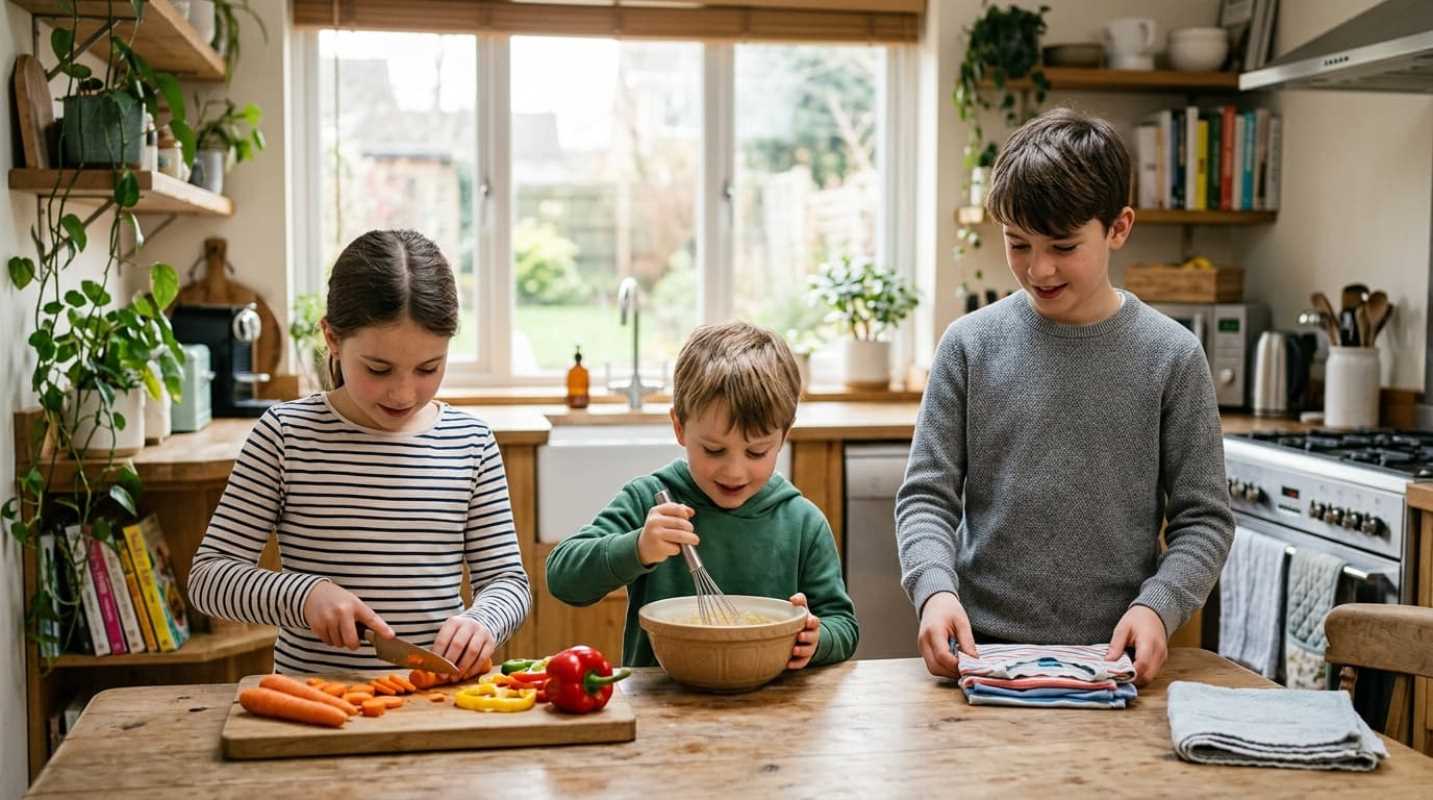
When children participate in preparing a meal, they take ownership of what lands on the table. They are also far more willing to try new vegetables or unfamiliar dishes when their own hands have helped make them. You don't need a formal cooking class to make this work. Instead, hand out age-appropriate jobs that build confidence
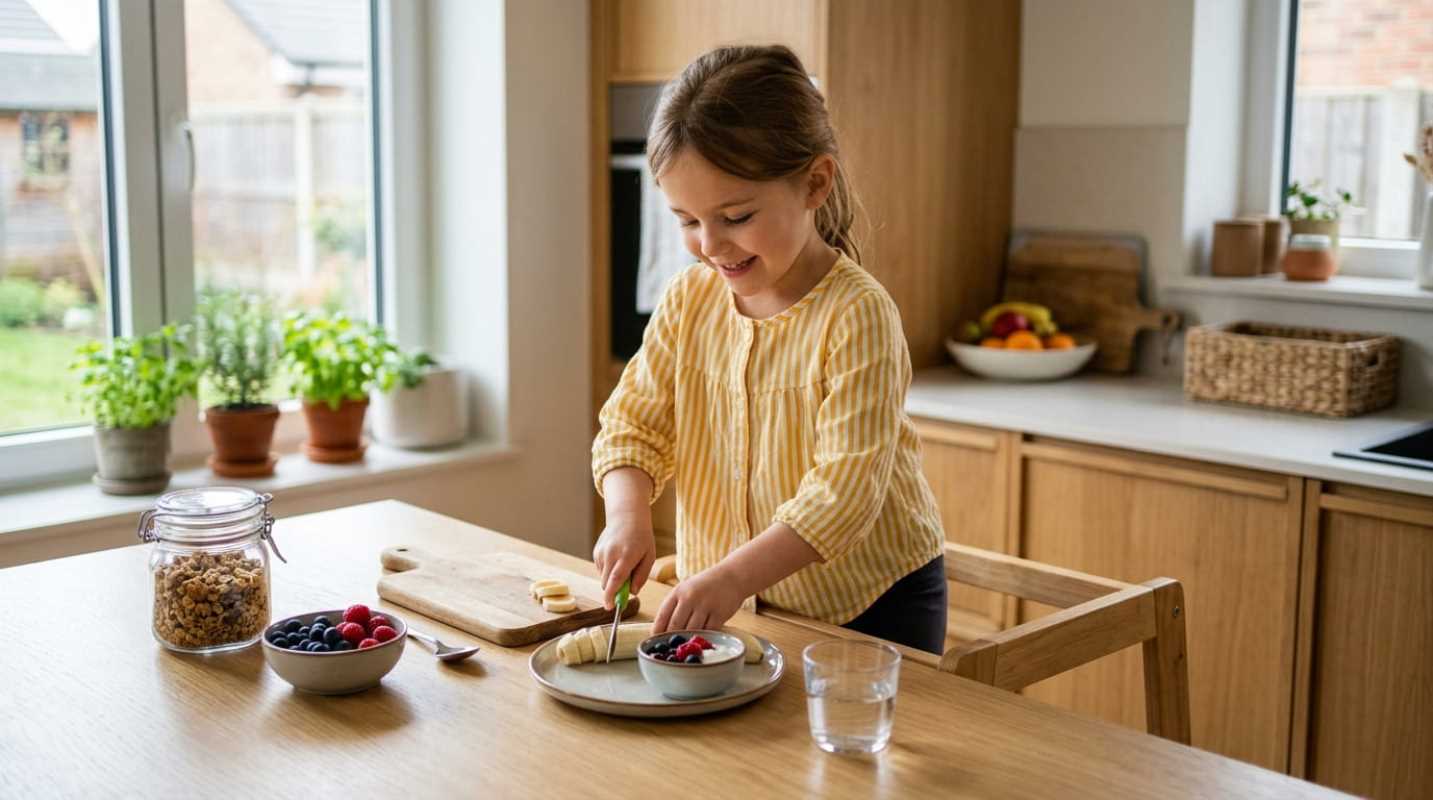
• Toddlers and preschoolers: Washing greens in a colander, tearing fresh herbs, or pouring pre-measured spices into a bowl.
• Elementary schoolers: Whisking salad dressing, peeling carrots, setting the table, or mashing potatoes.
• Tweens and teenagers: Chopping vegetables, managing the skillet, or taking charge of an entire side dish once a week.
Cleanup works best as a team sport, too. Put on a quick music playlist, assign one person to clear plates, another to wipe down counters, and someone else to pack up leftovers. Ten minutes of shared effort eliminates thirty minutes of solitary resentment at the sink.
Building Presence by Reducing Screen Distractions
Modern households face a quiet, constant rival at the dinner table: the smartphone. Roughly one in four Americans now eats every single meal alone, a massive jump over the past two decades. Even when families sit down together in the same room, digital interruptions often derail the conversation before it starts.
A phone resting face-up next to a dinner fork silently signals that whoever is on the other end of an alert matters more than the people sitting across from you. You don't need complicated rules or parental control apps to protect this space. You just need clear boundaries that everyone respects
• Set up a phone parking lot: Place a shallow basket or a charging tray on a counter away from the dining area. Every phone, tablet, and smart watch goes into the basket before anyone sits down.
• Model the rule as parents: Adults must follow the same standard. If you sneak a look at work emails under the edge of the tabletop, your kids will instantly check out emotionally.
• Postpone fact-checking debates: When a disagreement pops up over a sports record or movie trivia, avoid pulling out a phone to find the answer. Let everyone guess, laugh about silly theories, and check the real answer after the plates are in the sink.
Fueling Connection with Conversation and Games
"How was school today?"
"Fine."
"What did you learn?"
"Nothing."
Most dinnertime conversations fizzle out because we turn them into rapid-fire interrogations. Kids spend all day answering questions from teachers, coaches, and peers, so coming home to another quiz feels exhausting.
Yet kids, especially older ones, still want to talk. Research from Harvard's Family Dinner Project reveals that 80% of teenagers identify dinnertime as the single time of day they are most likely to open up and talk with their parents.³ You just need lighthearted, low-pressure prompts that get past standard one-word replies.
Try swapping typical questions for simple table games
• Rose, Thorn, and Bud: Each person shares one highlight from their day (the rose), one frustration or challenge (the thorn), and one thing they look forward to tomorrow (the bud).
• Two Truths and a Wish: Share two real events from your day and one thing you wish had happened. The rest of the family has to guess the wish.
• Childhood storytelling: Share a short, unpolished story about your own youth. Talk about a test you failed, an embarrassing middle school haircut, or how you met your best friend. Kids build resilience when they hear that their parents made mistakes and figured things out.
Consistency Over Perfection
Let's be realistic about family life in 2026. Evening schedules are chaotic, last-minute work projects pop up, and fatigue happens. If you demand a flawless, home-cooked feast seven nights a week, you'll burn out within a few days.
Dr. Anne Fishel, a family therapist and co-founder of The Family Dinner Project, often points out that takeout or frozen pizza delivers the exact same emotional benefits as an elaborate meal made from scratch. What matters is the warmth, laughter, and attention you bring to the table.
If traditional weeknight dinners don't fit your schedule, rethink the format
• The 10-minute breakfast: Sit down over cereal or toast for ten uninterrupted minutes to send everyone off with positive energy.
• The late-night dessert check-in: If sports practices keep you out until 8:00 PM, eat on the go and sit down together at 8:30 PM for tea and cookies.
• The weekend brunch anchor: Dedicate Saturday or Sunday morning as your guaranteed family meal of the week when nobody has to rush out the door.
Aim for three shared meals a week, choose any meal that fits, and build your routine from there. Focus on listening closely and enjoying each other's company. That simple habit turns an ordinary plate of food into something your family will cherish for years.
Sources:
1. World Happiness Report
https://www.worldhappiness.report/ed/2025/sharing-meals-with-others-how-sharing-meals-supports-happiness-and-social-connections/
2. Good News Network
https://www.goodnewsnetwork.org/study-finds-that-eating-dinner-as-a-family-makes-91-of-families-less-stressed/
3. The Family Dinner Project
https://thefamilydinnerproject.org/new-research-family-dinners-boost-happiness/