Picture this scene. It is 7:45 on a Tuesday morning. One kid cannot find their left shoe, another just remembered a science poster due in twenty minutes, and your phone is buzzing with work notifications. Have you been there?
You are not alone in feeling like family life has become a high-speed sprint. An advisory from the U.S. Surgeon General revealed that 48% of parents report their stress is completely a lot on most days.¹ That is nearly half of all parents feeling pushed past their limits. Between school runs, sports practices, digital noise, and demanding jobs, modern family life moves at a breakneck pace.
The secret to bringing peace back into your home is not about escaping to a silent retreat. It comes down to doing what actually matters and letting go of the rest. You do not need to overhaul your entire life overnight. A few intentional tweaks to your daily rhythms can dial down the volume on household tension and help everyone breathe a little easier.
Mastering Actionable Daily Routine Adjustments
Parents make roughly 35,000 decisions every single day. By the time 6:00 PM rolls around, your cognitive battery is drained. When decision fatigue sets in, even a spilled cup of milk can trigger an emotional meltdown from parents and kids alike.
You can protect your mental energy by leaning into habit stacking.³ The idea is simple: take a tiny new behavior and anchor it to an established habit you already do without thinking. Instead of building new systems from scratch, you piggyback on what already works.
Try these quick routine adjustments to eliminate daily friction
• The Launchpad basket: Place a dedicated bin by the front door for each person. Backpacks, signed permission slips, sports gear, and shoes go directly into these baskets right after dinner, ending the panicked morning scavenger hunt.
• The kettle stack: While waiting for your morning coffee or tea to brew, pack school snacks or sign school agendas. Coupling lunch prep with a morning beverage removes the departure scramble.
• The ten-minute evening sweep: Set a timer for ten minutes before bedtime. Put on an upbeat song, and have every family member return five out-of-place items to their proper spots.
• The shared digital wall: Keep one master digital calendar or a centralized dry-erase board in the kitchen. When schedules live exclusively in one parent's head, resentment and missed appointments quickly follow.
Setting Healthy Boundaries for Over-Scheduling
Take a hard look at your family calendar right now. Does it look like an active mosaic, or does it look like a chaotic battle plan?
A study from the Ohio State University College of Nursing found that 57% of parents report clinical burnout, largely fueled by internal and external pressure to raise exceptional kids through nonstop achievement.² Somewhere along the way, we convinced ourselves that good parenting means signing our children up for every sport, music class, and weekend tournament available.
Kids need unstructured downtime just as much as adults do. Free play and quiet afternoons let young nervous systems settle, recover, and build creativity.
Start defending white space on your schedule with the Rule of One. Cap each child at one weekday extracurricular activity per season. If your daughter chooses soccer, that is her sole commitment until the season ends. When an invitation for another weekend clinic arrives, permit yourself to say a polite no.
Try scheduling nothing blocks. Block out Saturday morning until noon as completely free time. No organized sports, no formal playdates, and no running errands across town. Pyjama mornings lower resting stress hormones and give everyone room to recharge.
Awareness and Shared Calm Practices for Parents and Kids
Family stress works as a bidirectional loop. When you walk through the door frazzled, your kids pick up on that nervous energy immediately. They start acting out or withdrawing, which spikes your frustration even further.
Children regulate their emotions through the adults around them. If you want a calmer home, you have to practice grounding yourself first.
Start with the sixty-second doorframe pause. Before you open the front door after work or step out of the car after school drop-off, pause. Take three slow, deep belly breaths. Let your shoulders drop. This brief pause resets your nervous system before you engage with your family.
You can also set up a calm corner in your home. This is not a punishment spot or a timeout zone. Fill a quiet nook in the living room with soft pillows, noise-canceling headphones, sketchpads, and tactile toys. When a child or parent feels overwhelmed, they can head to the corner to decompress without judgment.
Taking five minutes before bedtime to practice box breathing together also works wonders. Inhale for four counts, hold for four, exhale for four, and hold for four. Doing this side by side shows your children how to manage their big feelings in real time.
Strengthening Connection Through Low-Stress Rituals
When schedules get hectic, quality time is usually the first thing to disappear. Yet genuine connection is the fastest antidote to family friction. When kids feel emotionally connected to you, defiance drops.
Child psychologists often recommend a practice called special time. Spend just ten uninterrupted minutes every day with each child. Let them choose the activity, whether that means building Lego sets, drawing, or kicking a ball in the yard. Put your phone in another room. Ten minutes of focused attention fills their emotional cup and prevents attention-seeking meltdowns later in the evening.
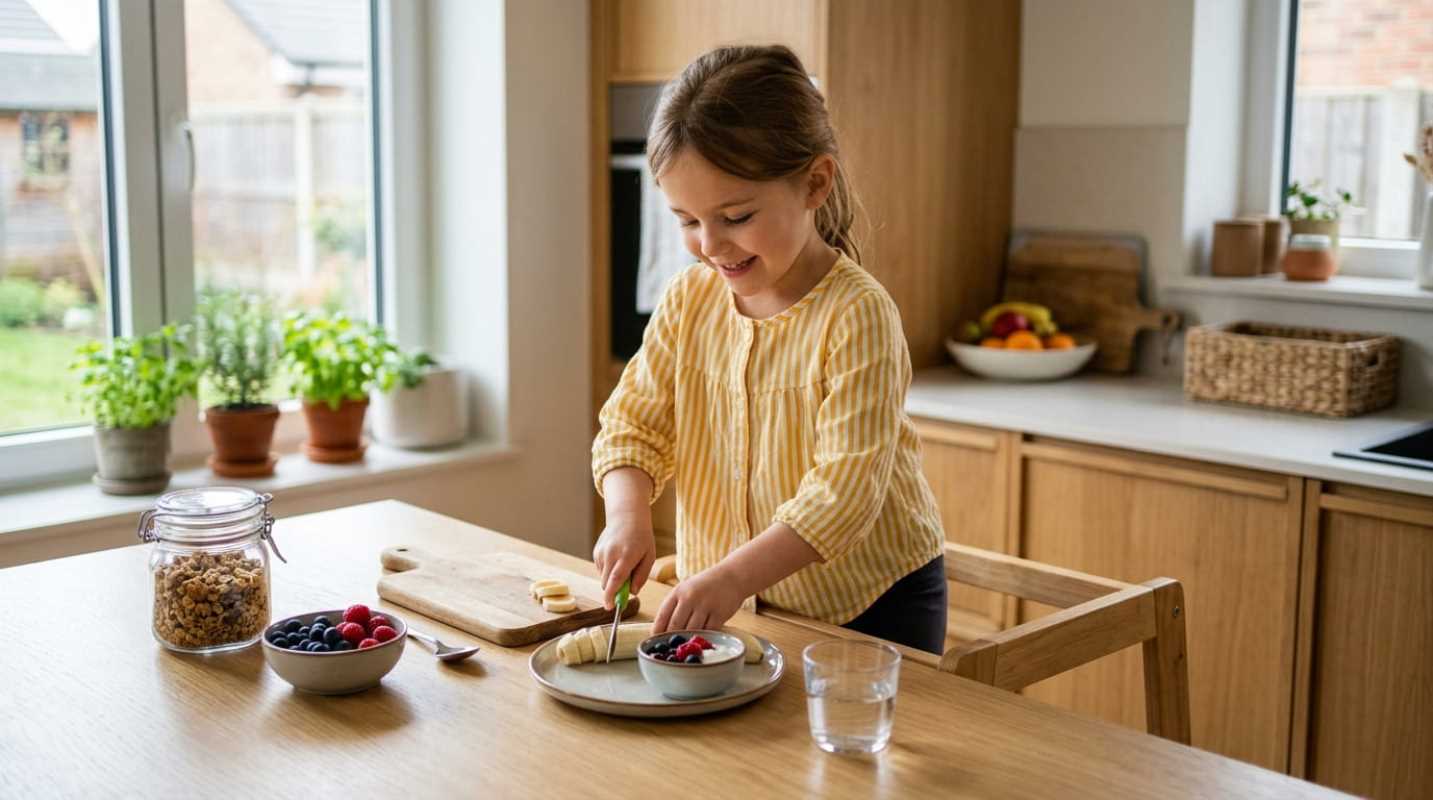
Look for low-effort connection points during everyday tasks. Cooking dinner does not need to be a solo chore. Put on music and let your kids wash vegetables or set the table. Turn mundane chores into shared moments.
Establish device-free zones, especially at the dinner table. When phones stay away from mealtime, family members look each other in the eye, talk about their days, and share a laugh. That face-to-face contact helps everyone unwind.
Consistency Over Perfection
You do not need an immaculate house, gourmet meals, or perfectly behaved children to enjoy a peaceful home. The pressure to be flawless is what creates parental burnout in the first place. Permit yourself to cut corners that do not matter. Serve breakfast for dinner on busy nights, use paper plates occasionally, and leave the laundry in the basket for another day.
Pick just one small adjustment from this article to test this week. Maybe you set up a launchpad basket by the door tonight, or maybe you protect this coming Saturday morning for pure rest.
Small, steady shifts transform your home environment over time. As you shed the burden of doing everything, you make space for what matters most: enjoying the family you are working so hard to raise.
Sources:
1. Parental Stress Levels Focus of US Surgeon General Advisory
https://www.healthpolicyohio.org/health-policy-news/2024/09/13/parental-stress-levels-focus-of-us-surgeon-general-advisory
2. Perfect Parent Study
https://nursing.osu.edu/news/2024/05/08/perfect-parent-study
3. Habit Stacking for Parental Mental Health
https://mother.ly/health-wellness/mental-health/habit-stacking/
*This article on Folloquy is for informational and educational purposes only. Readers are encouraged to consult qualified professionals and verify details with official sources before making decisions. This content does not constitute professional advice.*