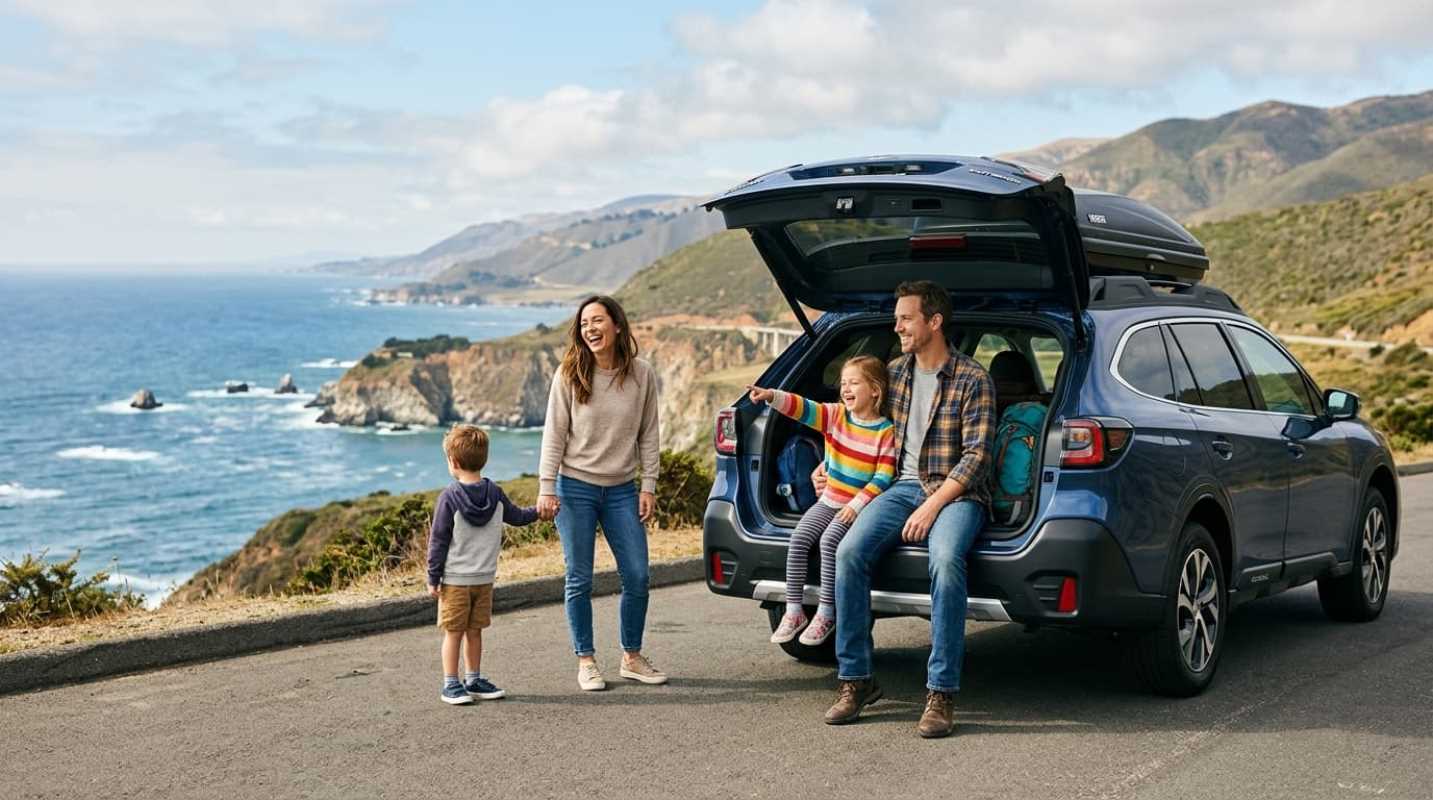
Have you ever loaded up your car with high hopes of family bonding, only to find yourself white-knuckling the steering wheel forty minutes later? You are not alone. Road trips bring everyone closer together, but without a clear game plan, close quarters can turn into a rolling pressure cooker.
Automotive travel accounts for nearly 90% of holiday domestic travel.¹ With airline fares staying unpredictable and flight delays testing everyone's patience, packing the car gives families control over their schedules and budgets.
The secret to a great drive is stepping away from survival mode. When you stop treating the highway like an endurance test and start treating it as part of the vacation, everything shifts. A little deliberate prep work prevents the dreaded backseat meltdowns before they start.
Creating Kid-Friendly Itineraries with Manageable Drive Times
The single biggest mistake parents make is planning driving legs around adult stamina instead of pediatric limits. You might feel fine knocking out eight straight hours with a travel mug of coffee. Your kids will hit a wall long before that.
A national survey of 2,000 parents revealed that parents view seven hours as the absolute maximum daily limit for kids under 13.² During that stretch, drivers logged an average of 22 repetitions of "Are we there yet?", 18 sibling arguments, and 14 full-blown meltdowns. The survey also revealed that 3½ years old is the hardest age for road trips, while 6-year-olds are generally the easiest.
To keep the peace, anchor your schedule to the needs of the youngest traveler
• Infants (up to 12 months): Cap your daily driving at 3 to 5 hours. Stop every 2 hours to feed them and take them out of the car seat to protect their airway alignment.
• Toddlers (1 to 3 years): Aim for 3 to 4 hours total. Split the driving into two legs, one in the morning and one during afternoon naptime.
• Preschoolers (3 to 5 years): Keep total drive time between 4 and 5 hours. Plan active movement stops every 2 hours to burn off physical energy.
• School-age kids (6 to 12 years): You can comfortably stretch legs to 6 or 7 hours with audiobooks, podcasts, and offline tablet games.³
• Teens (13 and up): They can handle 8 hours or more if you give them charging cords, snacks, and some say over the playlist.
Packing, Snack, and Backseat Sanity Hacks
Packing for a road trip usually means Tetris-stacking suitcases into the trunk. The trouble begins when you stop at an overnight hotel and have to haul three massive bags inside just to get toothbrushes and pajamas.
Use the single-bag overnight hack instead. Pack one designated duffel with sleepwear, fresh outfits, and toiletries for the whole family for that single night. Leave the heavy luggage locked in the trunk until you reach your final destination. Inside suitcases, give each child their own color-coded packing cube containing rolled daily outfits so they can grab clothes without tearing through everything.
Backseat organization keeps you from twisting around at 65 miles per hour to retrieve dropped crayons
• The fitted sheet trick: Stretch a fitted crib sheet across the back bench seat before installing car seats. Crumbs, dirt, and cracker dust drop onto the sheet, which you can simply pull off and shake clean at your destination.
• Over-the-seat organizers: Hang a cheap shoe organizer on the back of the front seats. Fill the pockets with water bottles, markers, wipes, and charging cables within your kids' reach.
• Cabin snack boxes: Avoid buying messy gas station snacks every two hours. Fill clear create supply organizers with pretzels, cheese sticks, berries, and dried fruit for each kid to manage on their own.
• The under-seat go-kit: Keep hospital-grade barf bags, wet wipes, paper towels, and a spare change of clothes in an open tote right under the front passenger seat for quick access.
Frequent Stop Ideas to Keep Everyone Entertained
Rest stops with vending machines and concrete sidewalks do very little to bleed off kid energy. If your kids spend a break standing around a convenience store parking lot, they will climb right back into the car with the same pent-up restlessness.
Skip the interstate service plazas whenever you can. Instead, open a map app and look for municipal parks or elementary school playgrounds two or three miles off your exit. A twenty-minute sprint across monkey bars and open grass resets a child's sensory tank far better than walking past gas pumps.
Try using the surprise envelope method to keep spirits high between stops. Wrap inexpensive dollar-store novelties like mini coloring books, fidget toys, or travel games in envelopes marked with specific mile markers or state borders. Handing them out as you cross each milestone gives everyone a fresh dose of entertainment right when boredom starts creeping in.
You can also hand over some control to the kids. Let each child pick one roadside attraction or quirky stop during the journey, whether it is a giant fiberglass dinosaur or a local ice cream shop. Giving them agency makes them active participants in the trip rather than passive passengers stuck in the back.
The Art of Flexibility on the Open Road
No matter how carefully you map out your route, something will disrupt your schedule. A lane closure might add forty minutes of bumper-to-bumper crawling, or an upset stomach might force an unexpected detour.
When delays happen, shift your mindset toward discovery rather than frustration. Some of the most memorable vacation stories come from taking an unintended detour through a historic small town or stopping at a roadside fruit stand you never planned to visit. If you stay calm, your children will mirror that behavior.
Parents need pit stops just as much as kids do. Swap driving duties every few hours so nobody gets highway hypnosis. If you are the only driver, step away from the car for five minutes during rest stops to stretch, grab some fresh air, and drink some water before taking the wheel again.
Making Memories That Stick
A smooth family road trip does not require flawless execution or rigid adherence to a spreadsheet. It comes down to realistic drive times, a clean backseat system, and the willingness to take a breather when energy runs low.
Years down the road, your kids will not remember whether you made it to the hotel by 5:00 PM. They will remember singing along to awful road songs, sharing funny roadside snacks, and watching the world roll past the window. Pick an upcoming weekend, pack a single duffel bag, and get out there.
Sources:
1. AAA Year-End Holiday Travel Forecast
https://newsroom.aaa.com/2025/12/aaa-year-end-holiday-travel-forecast/
2. ParentMap Road Trip Survival Guide
https://www.parentmap.com/things-to-do/hardest-age-road-trips-kids-survival-guide/
3. Emily Elevated Family Road Trip Hacks
https://www.emilyelevated.com/travelhacks/family-road-trip-hacks-kids-by-age