Picture this familiar scene. You are trying to get out the door on a Tuesday morning. Your seven-year-old is staring blankly at a pile of shoes, your four-year-old cannot reach their jacket, and you find yourself tying laces, buttoning coats, and zipping backpacks at lightning speed just to avoid being late.
Most parents have been there.
We want our kids to grow into capable, self-reliant human beings. Yet daily life moves fast, and doing things yourself is almost always quicker than watching a child struggle through basic tasks. The result is what child development researchers call the autonomy deficit. We end up over-managing the small moments, and without meaning to, we accidentally teach our children that they cannot handle things on their own.
Helping your kids take the wheel at home does not require an overhaul of your parenting philosophy. It starts with a shift in your daily habits, a few smart tweaks to your living space, and the patience to let your kids try, stumble, and figure things out.
The Mindset Shift: Moving from Doer to Coach
The biggest hurdle to child independence is rarely the child. It is our own instinct to jump in.
Data from the C.S. Mott Children’s Hospital National Poll on Children’s Health reveals a glaring gap between what parents believe and how they actually parent.¹ Although 74% of parents say they make a conscious effort to let their kids handle tasks alone, only 20% of parents with kids aged five to eight regularly let them prepare a simple meal or snack.¹ Even fewer let them speak directly to service workers or make small choices on their own.¹ The top reasons? Parents worry about safety, fall back on default habits, or worry that tasks will simply take too long.¹
When you constantly step in, you inadvertently send a message: You can't do this, so I will. Social psychologist Jonathan Haidt and advocates at Let Grow point out that modern childhood has traded real-world autonomy for screen time and constant adult surveillance, fueling record levels of adolescent anxiety.³ Real-world competence acts as an antidote to that anxiety.
To break the cycle, you have to transition from being the doer to acting as the coach. A coach does not run onto the field to kick the ball. A coach models the skill, provides guidance from the sideline, and cheers the effort.
Start by setting realistic expectations for your child's age. A preschooler cannot cook dinner, but they can carry an unbreakable bowl to the table. A nine-year-old might not manage the weekly grocery run, but they can easily pack their own school lunch.
Designing for Autonomy Child-Accessible Home Environment Tweaks
Look around your house for a moment. Most homes are built entirely for adult convenience. Light switches sit out of reach, dishes hide in tall cabinets, and coat hooks hang at forehead height for a six-foot adult. In an environment like that, kids are forced to ask for adult help dozens of times every day.
Maria Montessori built an entire educational movement around what she called the prepared environment. When physical surroundings fit a child's proportions, self-reliance follows naturally.
You do not need a total renovation to make your home work for your kids. A few low-cost adjustments can eliminate daily bottlenecks
• Low hooks and entryway baskets: Mount coat hooks 30 to 36 inches off the floor. Place an open bin or tray right next to the door for everyday shoes so kids can put away their gear the second they walk inside.
• Child-accessible kitchen station: Dedicate a low cabinet or bottom drawer to kid-safe cups, plates, and bowls. Add a small drink dispenser or lightweight mini pitcher of water in the fridge so they can quench their own thirst without asking you to pour.
• Curated capsule wardrobes: Morning clothing battles usually happen because kids face too many options. Hang a low rail with only three or four weather-appropriate outfits, making sure whatever your child picks is ready to wear.
• Low shelves instead of toy bins: Deep toy boxes invite kids to dump everything onto the floor in search of one item. Switch to open, low shelves displaying a few toys on trays to keep items visible and cleanup simple.
• Child-sized cleaning tools: Hang a miniature dustpan, a handheld broom, and a small cloth on low hooks. When juice spills, cleaning up becomes a normal physical task rather than a dramatic incident.
Mastering the Art of Waiting: Building Problem-Solving Before Stepping In
Pediatric occupational therapists often recommend a simple mental exercise: the ten-second pause.
When your child hits a minor snag, like wrestling with a tight jacket zipper or dropping an armful of books, count silently to ten before you move a muscle. Stepping in the split second a child hesitates denies their prefrontal cortex the chance to kick into gear. Give their brain a beat to assess the problem and try a different angle.
If your child asks for help immediately, implement the "ask three before me" rule. Encourage them to try three quick approaches first: look closer at the problem, check if something is upside down, or ask an older sibling before coming to you.
When you do step in, guide them with questions instead of doing the physical work for them
• "Which side of the puzzle piece is flat?"
• "Where do you think that strap needs to go so it clicks?"
• "What do we need to grab first before we wipe this water off the table?"
Treat mistakes as data rather than disasters. If the milk spills, do not gasp or sigh. Simply hand them a towel and say, "Spills happen. Let's wipe it up." Normalizing small failures gives kids the courage to keep trying without fear of disappointing you.
Structure as Freedom: Routine Charts and Self-Directed Daily Tasks
If your mornings feel like a constant loop of nagging, you are carrying the entire cognitive load of your household. Kids tune out repeated verbal reminders because they know you will eventually remind them again.
Visual routine charts turn external nagging into an internal habit. When you trade spoken commands for a visual list, you stop being the nagging parent and become a supportive partner.
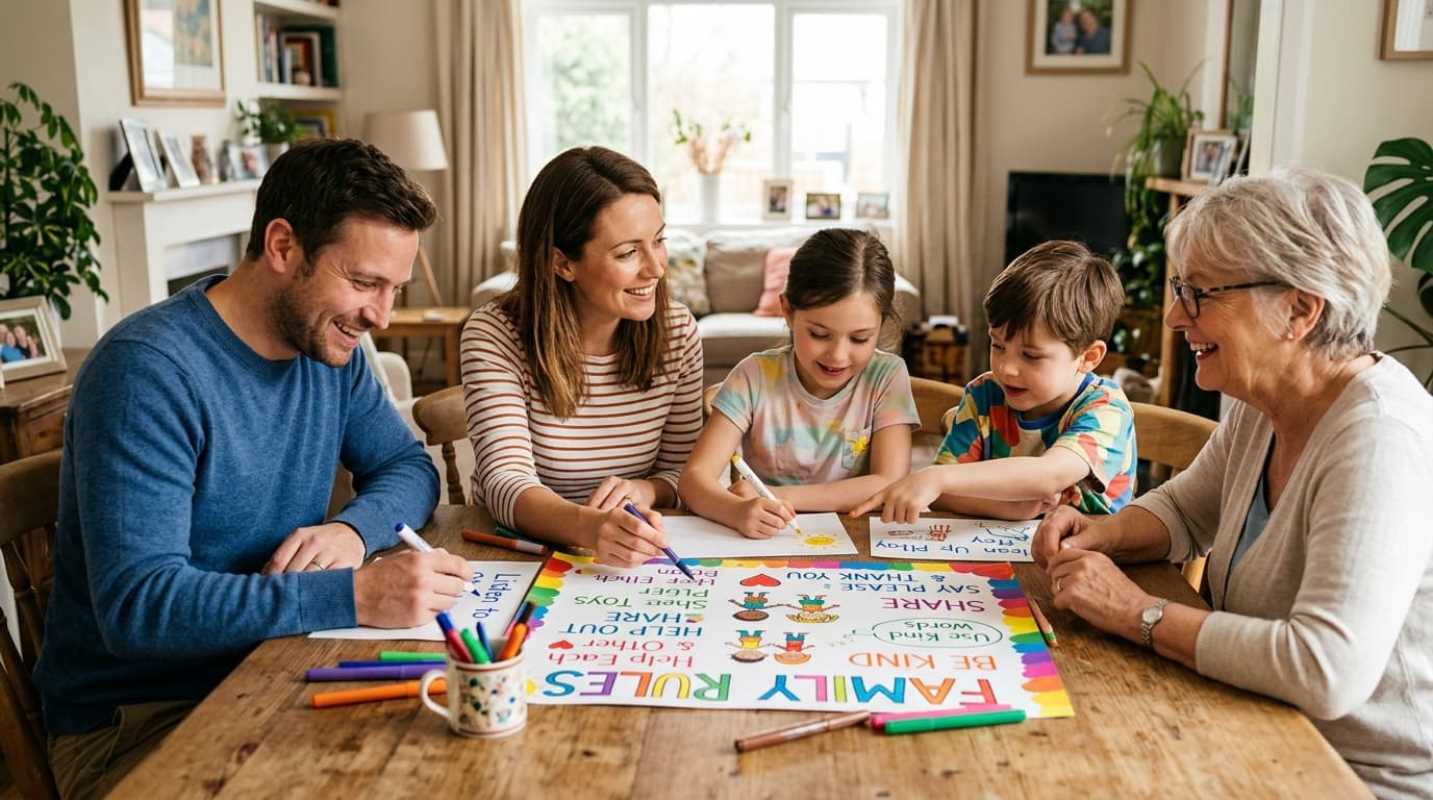
Sit down together on a weekend to create a morning and evening checklist. Let your child draw pictures or take photos of themselves doing each task, such as brushing teeth, making the bed, and packing a water bottle. Hang the checklist at eye level.
When your child asks, "What do I do now?" resist the urge to tell them. Instead, point them to the board: "Check your list and tell me what comes next."
Focus your praise on the process rather than the end product. The Child Mind Institute recommends giving specific, descriptive feedback: "You noticed your shoes were untied and stopped to fix them," or "You followed your morning checklist without a single reminder today." That kind of recognition builds genuine self-satisfaction rather than reliance on constant parental approval.
Building Resilience through Real Responsibility
Children thrive when they know their presence actually matters to the family unit. There is a world of difference between arbitrary busywork and real, functional responsibility.
The landmark Harvard Grant Study followed participants for over seven decades and found that regular participation in household chores during early childhood was one of the single strongest predictors of adult professional competence and mental health. Yet modern surveys show that while 82% of adults grew up doing chores, only 28% regularly assign them to their own kids.
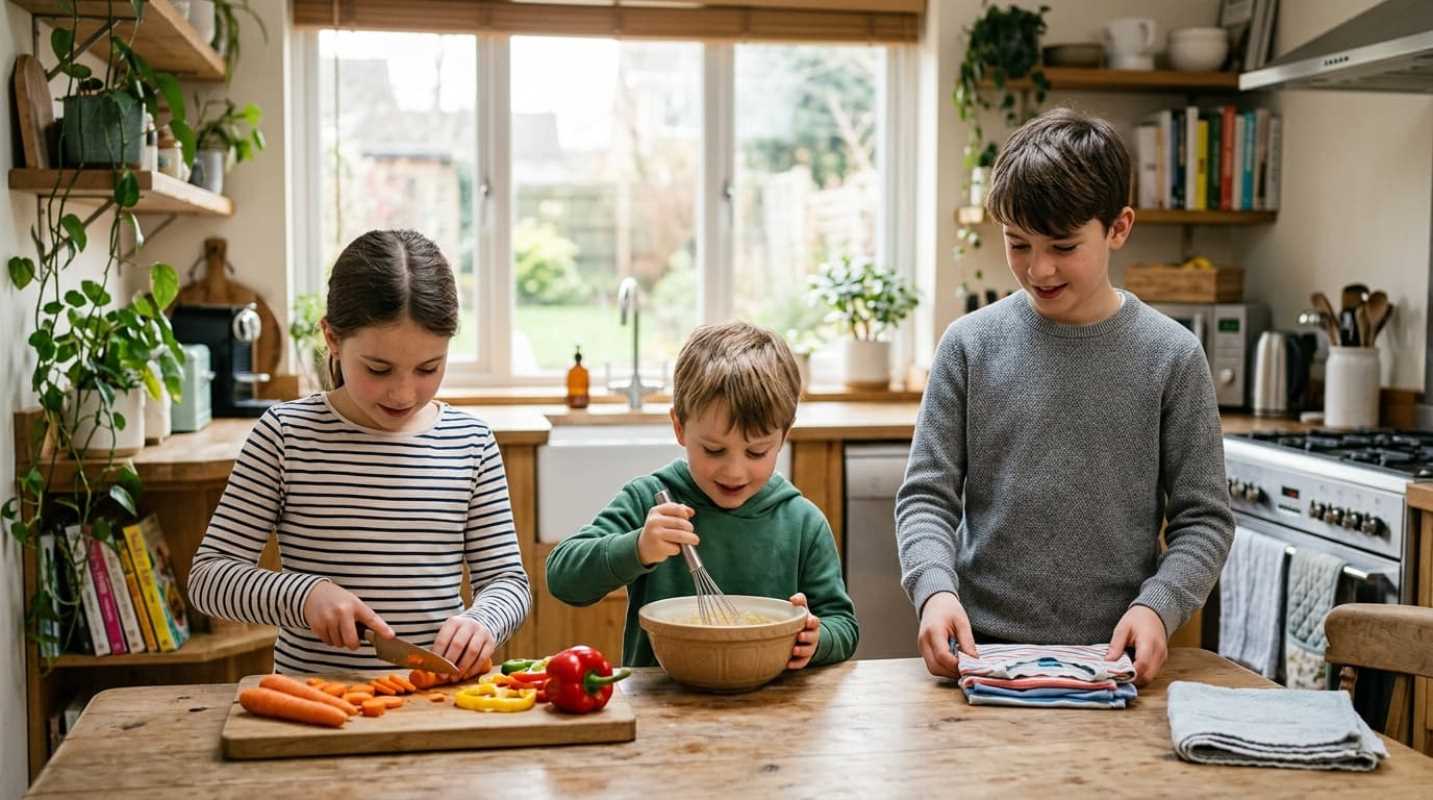
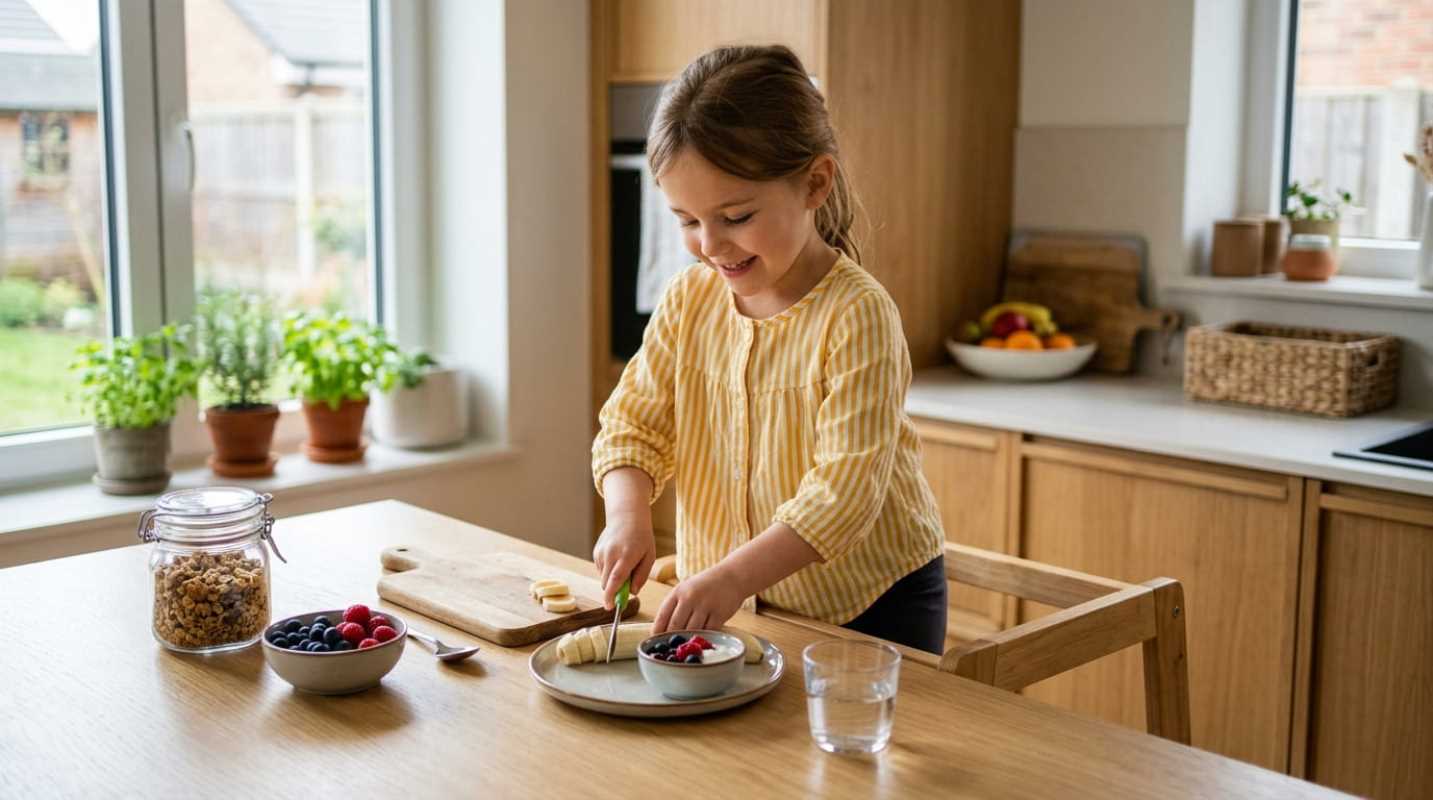
When you assign real chores, you show your child that they are a contributing member of the home. Plus, research by Randolph and colleagues found that regular practice with practical, multi-step tasks significantly strengthens executive functioning skills in young children.² Slicing soft fruit with a butter knife, measuring pet food, and sorting laundry all require focus, motor control, and sequential planning.
Let natural consequences do the teaching when it is safe to do so. If your child forgets to put their dirty soccer socks into the hamper, they might have to play in an older, mismatched pair next weekend. Experiencing that minor inconvenience teaches responsibility far better than an angry lecture from you.
Raising an independent child does not mean withdrawing your warmth or leaving them on their own. It simply means giving them the physical access, time, and trust they need to prove to themselves that they are capable. Start small, step back, and give your kids the space to surprise you.
Sources:
1. Promoting Children's Independence: What Parents Say vs. Do
https://mottpoll.org/reports/promoting-childrens-independence-what-parents-say-vs-do
2. Montessori Education and Executive Function Development
https://pmc.ncbi.nlm.nih.gov/articles/PMC11384441/
3. The Anxious Generation and Childhood Independence
https://letgrow.org/program/anxious-generation/