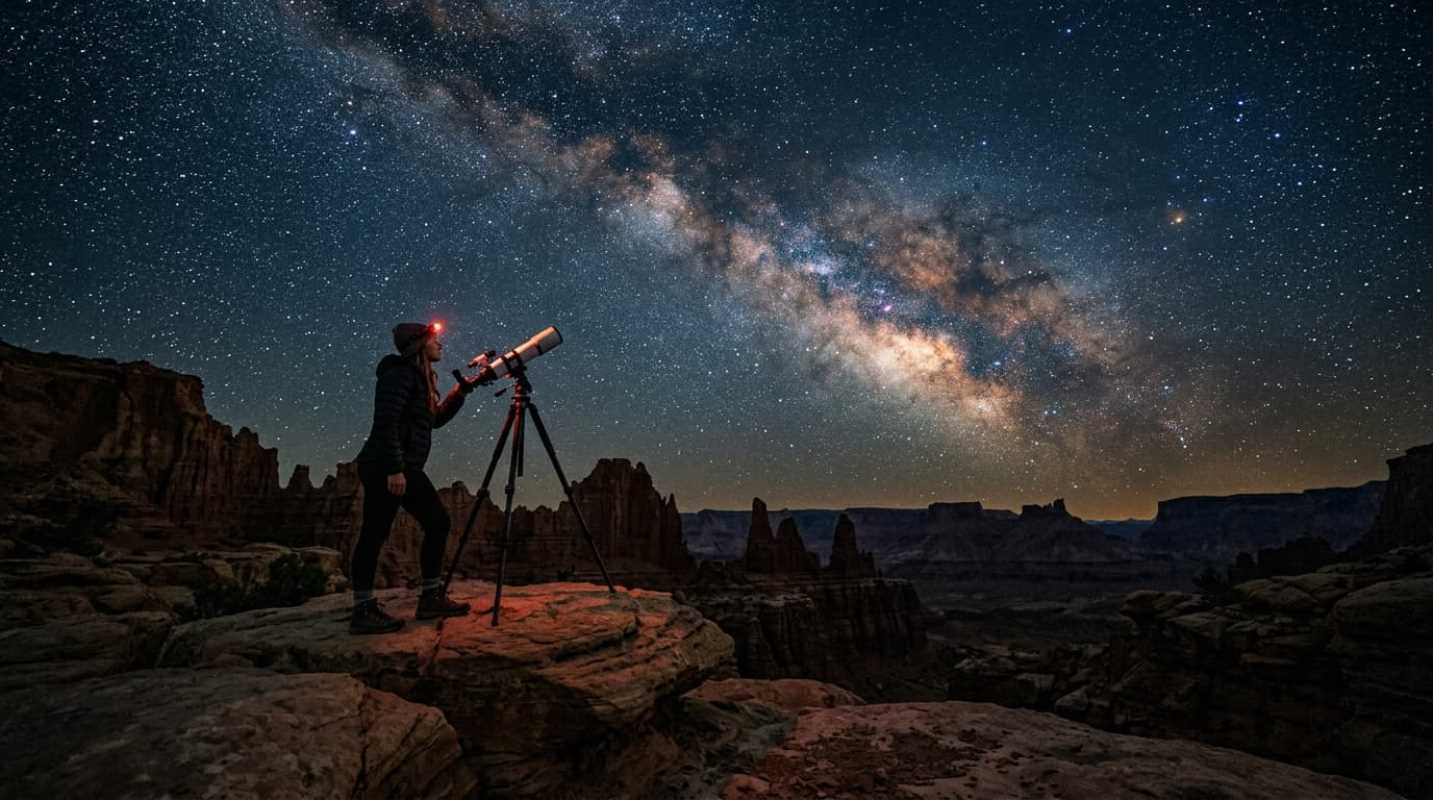
Most of us live in neighborhoods where streetlights drown out everything except the Moon and a couple of bright planets. When was the last time you saw the true arc of the Milky Way stretching overhead? For millions of people across the country, true darkness is something they have never experienced in person.
That reality is driving a massive movement to protect America's remaining dark skies from unchecked urban sprawl. Over the past several years, DarkSky International has certified dozens of public lands as official Dark Sky Parks, Reserves, and Sanctuaries.¹ These places protect natural night conditions, setting the benchmark for zero light pollution.
Standing under a sky packed with thousands of visible stars does something real to your brain. It slows your breathing, resets your sense of perspective, and cuts through mental fatigue. You do not need an astronomy degree to enjoy it, either. You just need a dark stretch of land and an open horizon.
Top-Tier Destinations for Your Celestial Bucket List
America has huge expanses of wilderness defined by high elevation, dry air, and geographical isolation. Those three factors make the difference between seeing a blurry smudge and spotting crisp star clusters with your naked eye.
Look at Death Valley National Park in California and Nevada. Astrotourism surveys rank Death Valley at the top of the list for raw sky darkness, helped by a 72% average clear-night rate and more than three million acres of wilderness. Harmony Borax Works gives astrophotographers historic ruins for dramatic foregrounds, while Dante's View sits at 5,476 feet above the desert floor for clear horizon shots.
Then there is Great Basin National Park in eastern Nevada. It sits far from any major metro area. Wheeler Peak climbs to 13,063 feet, which means the atmosphere above you is thin, cold, and remarkably steady. Great Basin also operates its own research-grade robotic observatory and hosts more than 50 night-sky events each year.
If you want pure scale, head south to Texas. The Greater Big Bend International Dark Sky Reserve covers over nine million acres across Big Bend National Park and Big Bend Ranch State Park. It is the largest certified dark sky reserve on Earth, offering the lowest light pollution measurements of any park in the lower 48 states.
Utah holds the highest concentration of certified Dark Sky Parks in the world.² Natural Bridges National Monument earned the very first certification back in 2007. Nearby Bryce Canyon sits at an elevation between 7,500 and 9,000 feet, where the dry air lets you see up to 7,500 individual stars on moonless nights, alongside the faint glow of the Andromeda Galaxy.
Do not overlook the East Coast. Cherry Springs State Park in Pennsylvania rests on an isolated 2,300-foot plateau in the Susquehanna Plateau. It earned a rare Bortle Class 2 rating, which is almost unheard of along the Eastern Seaboard. Its dedicated Astronomy Observation Field gives visitors a complete 360-degree horizon with no local lights around.
Mastering the Calendar and Best Times for Clear Skies
Timing is everything when you plan an astronomy trip. The darkest park in the country will look completely washed out if you show up during a full moon.
• Track the Moon cycle: Always book your trips during the New Moon window, specifically within four to five days before or after the astronomical new moon. Think of a bright moon like giant sky floodlights. It drowns out distant galaxies, nebulae, and the Milky Way dust lanes.
• Know the Milky Way season: In the Northern Hemisphere, the bright core of the Milky Way is visible only from late March through October. Winter skies shift focus toward brilliant individual stars and constellations like Orion and Taurus, alongside the Pleiades star cluster.
• Take advantage of winter clarity: Late autumn and winter bring colder air, which holds far less water vapor than muggy summer air. Less humidity means sharper, cleaner viewing conditions through your optics.
• Check cloud forecasts: Pure darkness does not matter if a thick marine layer or storm front rolls in. Before packing your car, check forecasting tools like ClearDarkSky.com or the Astrospheric app to track cloud cover, humidity, and atmospheric steadiness.
You do not need to drop thousands of dollars on complex computerized equipment right away. Many beginners buy expensive computerized telescopes that end up sitting in a closet because the alignment process is frustrating.
Start with a simple setup
• Astronomy binoculars: A pair of 7x50 or 10x50 Porro prism binoculars is the smartest first purchase.³ They cost between $40 and $150, give you a wide view, and let you locate Jupiter's four Galilean moons, lunar craters, and bright star clusters without any setup hassle.
• Dobsonian reflector: If you want a telescope, get a 6-inch or 8-inch Dobsonian reflector. These use an intuitive push-to-mount, meaning nearly all your money goes toward quality glass rather than electronic motors.
• Red LED headlamp: White light ruins your dark adaptation in a fraction of a second. Your eyes need 20 to 30 minutes to build up night-vision chemicals, and red light preserves that adaptation completely.
• Reclining camp chair: Staring straight up for hours while standing gives you a sore neck within 15 minutes. A zero-gravity reclining chair keeps your spine supported and lets you look straight up at the zenith in comfort.
• Thermal layers: High deserts and mountain plateaus often drop by 30 to 40 degrees immediately after sunset. Pack wool base layers, a windbreaker, and gloves even during late spring or early autumn.
If you prefer guided trips, professional outfitters take out the guesswork. Sedona Stargazing Tours in Arizona uses custom 11-inch GPS telescopes with laser-guided sky talks. In Utah, Dark Ranger Telescope Tours pairs former park rangers with massive light-bucket telescopes. Hawaii Forest & Trail takes guests up toward the summit of Mauna Kea to watch the sunset above cloud inversions before stargazing through tracking telescopes at 9,000 feet.
Practical Tips for an Unforgettable Night Under the Stars
Heading into a certified dark sky zone requires a little prep work so you stay safe and respect other stargazers.
• Check access permits early: Some locations, like the Astronomy Observation Field at Cherry Springs, require reservations or overnight observation passes. Check the local park website before you leave.
• Protect everyone's night vision: When you arrive at an observation area after sunset, turn off your vehicle headlights immediately. Cover interior car lights and use only red light sources.
• Dim your smartphone display: If you use sky-mapping apps like Stellarium or SkySafari, switch on their internal red night mode and set your phone screen to minimum brightness.
• Practice shared etiquette: Dark sky zones are quiet environments. Keep voices low, watch your step around other people's telescope setups, and avoid waving flashlights around.
Your Journey Into the Night Awaits
We spend most of our working days staring at glowing digital screens. Stepping outside into genuine, unbroken wilderness reminds you how big and wild the universe really is.
You do not need years of training or a truck full of equipment to appreciate an authentic dark sky. A warm coat, a clear night, and a pair of binoculars can change how you see the world above you. Make the trip to one of these certified havens, and consider finding ways to cut back on light pollution in your own neighborhood when you return.
Sources:
1. Milky Way Forecast
https://milkywayforecast.com/guides/best-dark-sky-parks-usa
2. Visit Utah
https://www.visitutah.com/places-to-go/dark-sky-parks
3. Cosmic Match
https://cosmicmatch.io/blog/gear-reviews/best-binoculars-stargazing-beginners