Have you ever touched a stone wall built thousands of years ago and wondered how on earth people managed it without modern machinery? There is something wild about standing in a place where entire civilizations lived, argued, raised families, and carved cities out of raw mountain rock.
Traveling to historic ruins has changed quite a bit recently. In 2026, heritage travel is all about smarter access, smaller crowds, and protecting fragile masonry before it wears away.
Governments and conservation parks now use timed-entry tickets and strict daily visitor caps. What does that mean for you? It means you get a much better experience with fewer crowds blocking your view, as long as you plan.
Machu Picchu and the Cloud-Kissed Citadel of Peru
High above the Urubamba Valley, Machu Picchu sits on a steep mountain ridge at 2,430 meters. The Incas built this mountain retreat around 1450 CE without iron tools, wheels, or draft animals.
Their secret was dry-stone ashlar masonry. Incan stonecutters shaped granite blocks so precisely that they fit together without any mortar. During earthquakes, these stones shift slightly and then slide right back into place. More than half of the citadel's structure sits underground, where gravel-packed drainage layers prevent heavy Andean rains from washing the terraces down the mountainside.
Visiting today requires careful planning. Peru caps daily entries between 4,500 and 5,600 visitors to protect the stone paths.¹ You cannot wander freely through the ruins anymore.
When you book your entry, you must pick one of three strict, single-direction walking circuits :²
• Circuit 1 (Panoramic): Focuses on the upper terrace overlooks, offering the classic panoramic view that most travelers want for photography.
• Circuit 2 (Classic): Covers the main urban and temple zones, giving you the deepest access to the core Incan buildings.
• Circuit 3 (Royalty): Guides you through the lower agricultural sectors and royal quarters, requiring less steep climbing.
If you want to dodge the thickest crowds, book an afternoon time slot. Morning trains bring hundreds of day-trippers from Cusco, while late afternoons give you quiet stone plazas and softer mountain light.
Petra and the Rose-Red City of Jordan
Carved directly into red sandstone cliffs in southwestern Jordan, Petra was the capital of the Nabataean Kingdom two thousand years ago. Although it looks like pure art, it is actually a masterclass in desert survival.
The Nabataeans were skilled hydrologists. They carved dams, cisterns, and terracotta pipes that funneled winter flash floods into freshwater storage. This clever system kept 30,000 residents alive in an arid gorge while shielding their rock-cut buildings from water erosion.
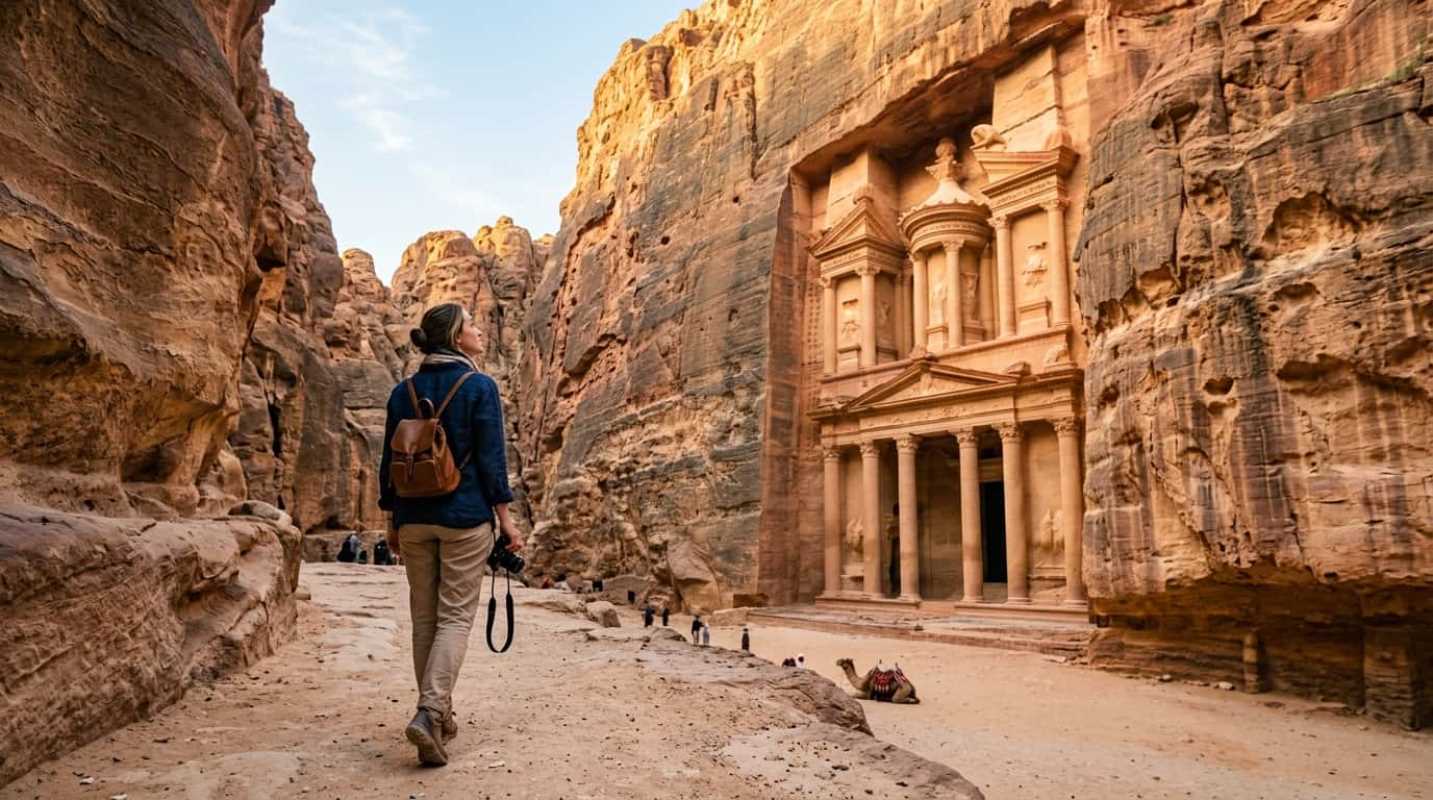
Your visit starts with a walk through the Siq, a winding natural gorge over a kilometer long between towering rock walls. At the end of the corridor, the famous Treasury facade appears in the desert sun. Recent radar surveys beneath the Treasury floor even uncovered a hidden tomb containing twelve burials, showing that Petra still holds many secrets.
Protecting this fragile city requires care from travelers. Sandstone is soft and brittle, so never climb on carved walls or touch ancient inscriptions. If you have mobility challenges, take one of the official electric carts run by the local tourism authority rather than hiring working animals along the Siq.
Angkor Wat and the Sacred Khmer Empire
Spread across northwestern Cambodia, Angkor Wat is the largest religious structure in the world. Built during the 12th century under King Suryavarman II, the temple represents Mount Meru, the cosmic home of Hindu gods.
The Khmer builders did not just pile up stone blocks. They designed a vast system of artificial reservoirs called barays that collect monsoon rainwater. These reservoirs keep the groundwater levels steady under the complex, which stops the heavy central towers from sinking into soft mud.
Exploring Angkor takes time, so buy a three-day pass instead of rushing through in a single afternoon. You can hire an electric tuk-tuk to travel between Angkor Wat, the stone faces of Bayon, and the jungle roots at Ta Prohm.
Keep in mind that these ancient ruins are active religious shrines. Dress respectfully by keeping your shoulders and knees covered, and stick to the raised wooden boardwalks designed to protect fragile tree roots and stone carvings.
The Colosseum and the Grandeur of Rome
Right in the middle of modern Rome, the Colosseum shows the sheer scale of imperial Roman engineering. Completed around 80 CE, this massive amphitheater once held up to 50,000 spectators for gladiatorial matches and staged events.
The building stood firm thanks to a network of travertine arches and concrete vaults that carried immense weight. Under the wooden arena floor lay the hypogeum, a two-level maze of corridors, animal cages, and rope-and-pulley lifts that raised performers and scenery directly into the games.
Visiting the site is much easier today than it used to be. A modern elevator and level walkways allow visitors with limited mobility to explore both the upper rings and parts of the underground tunnels.
Because millions of people visit every year, Rome requires named, timed-entry tickets that match your government ID. Help protect the monument by staying on designated visitor ramps, keeping your hands off the bare tufa rock, and skipping unauthorized street ticket sellers outside the metro station.
Top Recommendations for Heritage Travelers
Planning a trip to ancient ruins requires a few smart travel habits before you pack your bags
• Book tickets early: Timed-entry slots at famous archaeological parks often sell out two or three months in advance.
• Start early or late: Visiting during early morning or late afternoon helps you avoid both midday heat and massive tour bus groups.
• Hire licensed guides: Local guides provide accurate historical context while helping you follow local preservation rules.
Becoming a Steward of History
Standing before stone walls that survived centuries of storms and wars puts modern life in perspective. These ancient places lasted this long because early builders understood how to work alongside stone, water, and earth.
Today, keeping them standing depends on all of us. When you walk through an ancient gateway, you are more than just a tourist checking an item off a bucket list. You are a temporary caretaker.
Respect the marked paths, follow the daily capacity rules, and leave every stone undisturbed. That way, future generations can walk through these same gates and listen to the echoes of the past.
Sources:
1. How Many Visitors Can Machu Picchu Really Handle
https://www.alpacaexpeditions.com/how-many-visitors-can-machu-picchu-really-handle-machu-picchus-carrying-capacity/
2. Machu Picchu Circuits Breakdown and Subroutes
https://machupicchuguided.tours/circuits-breakdown-subroutes