You hear the first heavy drops rattling against the windowpane, and your stomach drops right along with them. School is out, the backyard is quickly turning into soup, and your kids are already staring at you with that restless, wandering energy that signals trouble. Have you been there?
For many parents, the immediate reaction is to reach for the remote control. It makes sense when you need a quick fix. An October survey by Ann and Robert H. Lurie Children’s Hospital found that 49% of parents rely on screens daily to manage household routines, while 60% report feelings of guilt about screen overload and lost connection.¹
You can break that guilt cycle by shifting how you look at bad weather. Rainy afternoons do not have to feel like a holding cell. Instead, they offer a natural pause in an otherwise frantic weekly schedule. When you have a simple mental toolkit ready to go, staying inside becomes an open invitation to slow down and play together.
Setting the right tone begins with taking the pressure off your own shoulders. You do not need to act like a summer camp activity director running an eight-hour program. In fact, child development specialists recommend the ten-minute starter rule. You sit on the rug, give your kids ten minutes of pure, undistracted attention to help launch a project, and then step back into the background. Your early presence fills their connection cup, giving them the confidence to carry the play forward on their own.
Low-Prep Indoor Games and Creative Crafts
When you need an activity fast, the last thing you want is a recipe that requires three trips to a grocery store. The most engaging indoor pastimes rely on supplies you already have shoved into drawers or recycling bins.
Cardboard, markers, and painter's tape are your best friends on a stormy afternoon. Painter's tape is especially magical because it sticks to carpets, walls, and wood trim without peeling off paint or leaving sticky residue.
Here are four simple, low-prep creations and games that take less than five minutes to get running
• Painter's tape floor cities: Roll out a six-foot strip of butcher paper, or apply painter's tape directly onto a hardwood floor or rug. Sketch streets, train crossings, roundabouts, and parking stalls. Hand your children toy cars, wooden blocks, and plastic figurines to populate their new town.
• Cardboard delivery box raceways: Take long cardboard flaps from old shipping boxes and turn them into ramps. Tape one end of the flap to a couch armrest or the middle step of a staircase. Kids love testing which toy cars, marbles, or plastic balls zoom down the different slopes the fastest.
• Living room clue hunts: Write five quick riddles on scrap paper and hide them in a sequence around the house. A clue might say, "Look where we keep the cold milk," or "Check under the spot where muddy boots sleep." The final clue can lead to an afternoon apple snack or a fresh puzzle.
• Kitchen sink science lab: Fill a wide baking dish with two cups of cornstarch and one cup of water to create oobleck. This weird substance feels rock solid when kids punch it or squeeze it into a ball, yet it drips like syrup the moment they relax their hands.
Active Indoor Play to Burn Energy
Quiet creates wonders, but only if your kids have already blown off some physical steam. Cooping children up inside without movement is a recipe for tears and meltdowns. Research published in Humanities and Social Sciences Communications found that the emotional dips tied to heavy screen habits stem heavily from the displacement of physical activity, which accounts for 31% to 39% of that negative link.²
Kids need gross motor play to regulate their nervous systems. Occupational play specialists suggest a simple rhythm for stormy days: burn high energy first, move to sensory or creative activities second, and finish with quiet connection.
Try these quick ways to get your kids moving safely in tight quarters
• The hallway yarn laser maze: Tape strings of yarn or low-tack masking tape across a hallway at random heights and angles. Challenge your kids to crawl, wiggle, and step through the corridor from one side to the other without bumping the lines.
• Living room agility tracks: Scatter sofa cushions, throw pillows, and bathroom floor mats across the carpet. Challenge your kids to hop from cushion to cushion without touching the floor. You can time each run with a stopwatch on your phone while they race to rescue small stuffed animals.
• Balloon keep-it-up: Blow up two balloons and place a strip of tape across the center of the rug to act as a volleyball net. Balloons keep the stakes low because they float slowly and will not shatter picture frames or dent walls when hit with full force.
• Living room freeze dance: Put on an upbeat playlist and pause the song at random intervals. Everyone has to freeze in place the second the music cuts out, no matter what silly posture they find themselves in.
Cozy Family Bonding Experiences
Once your living room athletes have worked up a sweat and caught their breath, the indoor mood naturally settles. This is the moment to lean into warmth and calm, low-stimulation activities.
Allowing your kids to experience moments of quiet downtime carries real developmental value. Research on child development highlights that open-ended pauses and daydreaming prompt original thinking, self-direction, and healthy problem-solving skills.³
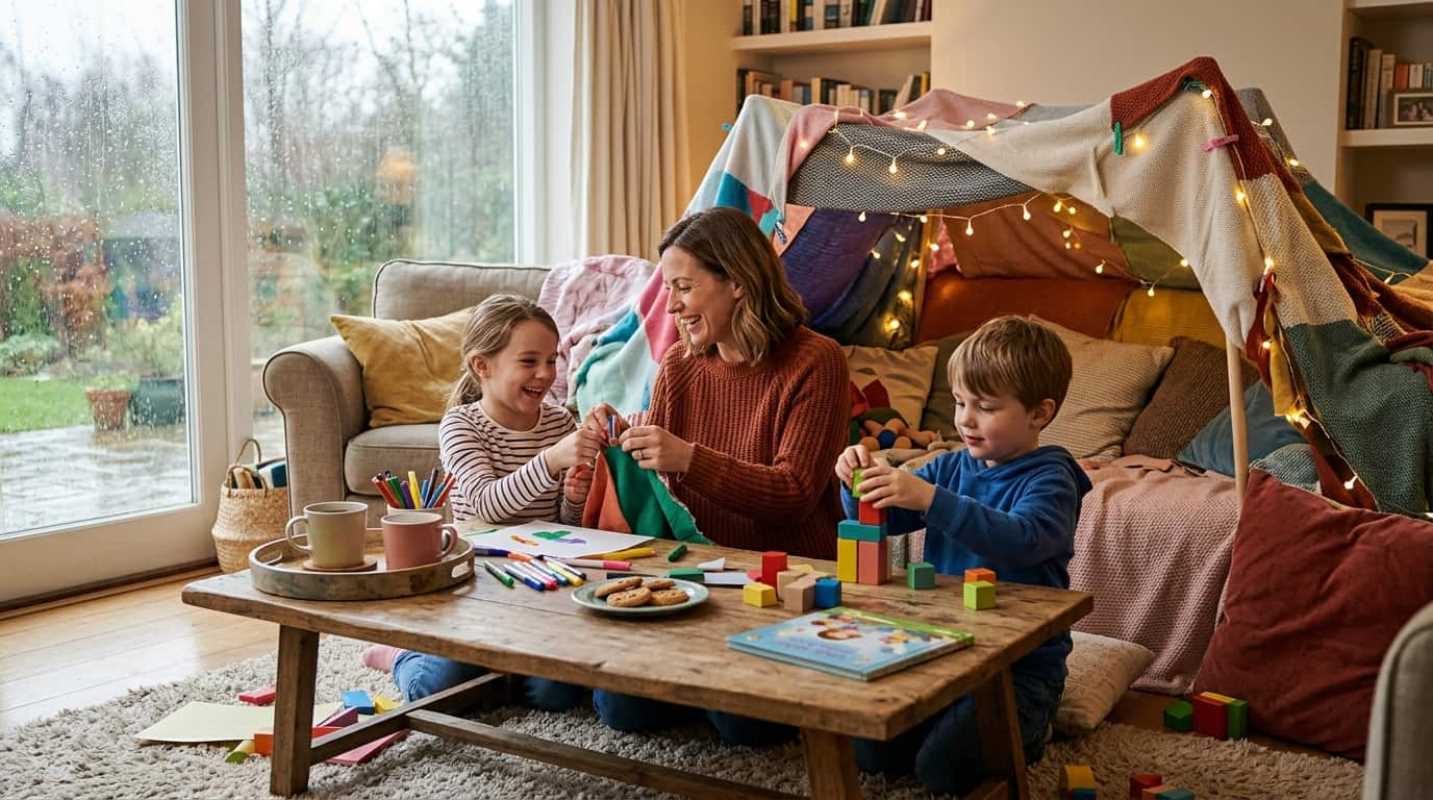
• The ultimate blanket fortress: Pull two dining chairs into the living room, drape a large fitted sheet over the backs, and weigh down the corners with heavy books or couch cushions. Line the interior with sleeping bags, pillows, and fairy lights. Eating lunch inside a dark, cozy tent instantly turns an ordinary sandwich into an adventure.
• Flashlight shadow theater: Dim the overhead lighting, sit inside your fort or against an empty wall, and hand out flashlights. You can make simple cardboard animal silhouettes on create sticks or use your hands to cast shapes while telling spontaneous campfire tales.
• Audiobook building sessions: Turn off the television screen and turn on an engaging children's audiobook from your public library app. Set out a bin of building blocks or a tub of playdough on the dining table. Children absorb stories deeply while their hands stay busy with tactile materials.
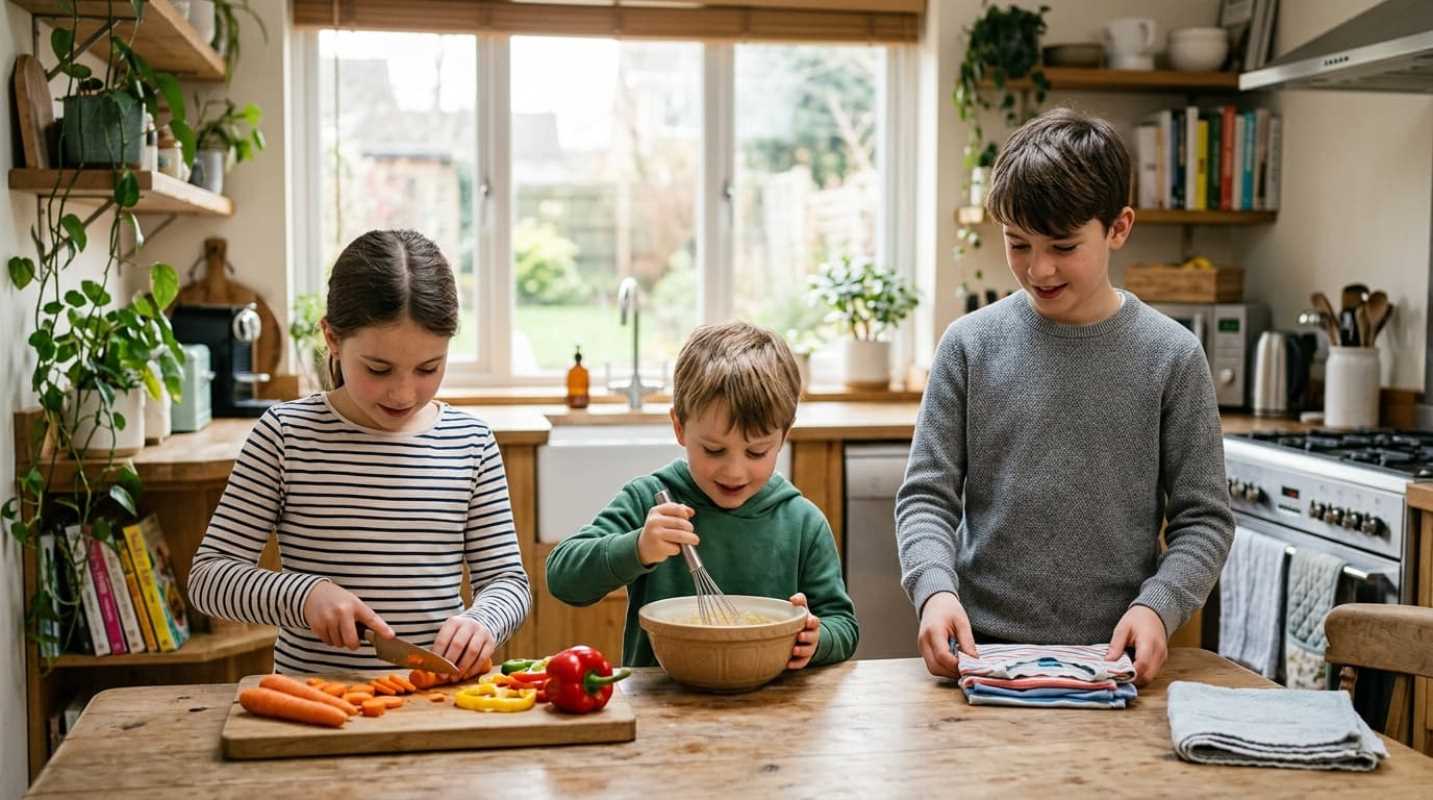
• Simple sheet-pan baking: Pick a basic recipe that invites small hands to help. Measuring out oats for cookies, mashing overripe bananas for bread, or shaking cinnamon sugar onto toast lets children practice practical skills while filling the house with delicious aromas.
Making Memories Without the Mess
A common trap for parents is thinking every indoor event needs to look like an elaborate social media post. When you focus on picture-perfect activities, you end up feeling stressed about the inevitable glitter spills and flour clouds.
Keep cleanup fast by laying down a plastic shower curtain beneath paint projects or sensory bins. When the kids finish playing, you simply lift the four corners of the plastic sheet, shake the crumbs into the trash, and fold it back into the closet. Fast cleanup protects your good mood.
Your presence matters far more than an immaculate create setup. Pick two or three simple ideas, step into the action for the first ten minutes, and let your children take the wheel from there. When you treat bad weather as a chance to slow down, grey skies might just become your family's favorite forecast.
Sources:
1. Screen Time 2025: Survey of Parents
https://www.luriechildrens.org/en/blog/screen-time-2025/
2. Screen Time and Children's Mental Health
https://naturescoutscollective.com/screen-time-childrens-mental-health/
3. Embracing Boredom: The Hidden Benefits for Child Development
https://allaboutkids.com.au/blog-details/embracing-boredom-the-hidden-benefits-for-child-development