Have you ever tried getting your entire household out the front door on an ordinary school morning? Shoes vanish, backpacks end up in random rooms, and someone inevitably forgets their lunch. Now imagine doing that in total darkness while smoke alarms screech or severe weather warning sirens wail outside. Panic takes over fast when you have to invent a response on the spot. Preparedness replaces that chaos with clear action.
The numbers tell an interesting story. FEMA household surveys show that over 50% of Americans discuss disaster planning, but only 32% actually practiced their plan in the past year.¹ On top of that, roughly 26% of people point to financial cost as the biggest hurdle to getting prepared.²
Here is the good news: real safety does not require thousands of dollars in survival gear or a fortified bunker. A functional emergency plan is simply a set of shared family habits. When you treat the process like a practical team project instead of a doom-and-gloom lecture, everyone from your kindergartner to your teenager can pick up the steps without breaking a sweat.
Establishing Communication and Meeting Spots
When local cell towers get overloaded during an ice storm or flash flood, standard phone calls drop instantly. If your kids are at school and you are across town at work, that silence is terrifying. Setting up your communication network before anything happens removes the guesswork.
First, set up a hub-and-spoke contact. Pick an out-of-area relative or close friend who lives at least 100 miles away, preferably in a different telephone area code and power grid zone. Local lines jam quickly during regional events, but long-distance text routing usually keeps moving. Teach every family member to send a quick text message to this single person to report their location.
Next, stick to a text-first rule. Text messages require a tiny fraction of the data needed for a voice call. Even when a mobile network seems completely dead, a short SMS will stay queued on your phone and automatically push through the split second a signal opens up.
Finally, establish three clear meeting locations so nobody wanders around searching for each other
• Immediate exit spot: Pick a fixed object right outside your home, such as the neighbor's mailbox or a specific maple tree on the curb. This is where everyone regroups during a house fire.
• Neighborhood rendezvous: Choose a walkable local landmark, like the neighborhood playground gate or the front steps of the public library, in case a gas leak or street closure blocks your front yard.
• Regional refuge: Select a designated home or shelter outside your city limits if authorities issue a community evacuation order.
Do not rely entirely on smartphone memory. Battery banks drain, and phones break. Print out a simple laminated card listing these spots, your out-of-area contact, and local guardian numbers. Slip one into every child's school backpack and tuck another into your own wallet.
Curating Go-Bag Needs for Every Member
You do not need to buy military tactical packs. Standard school backpacks sitting in your closets work fine. The trick is making each pack personal, lightweight, and easy to grab in thirty seconds.
Start with individual needs. A teenager can carry a heavier pack with extra water bottles and personal hygiene items, while a seven-year-old only needs light gear. For younger kids, always include a comfort item. A familiar coloring book, a small stuffed animal, and a favorite snack can help lower a child's stress level in an unfamiliar shelter.
Do not forget the unglamorous paperwork. Place photocopies of birth certificates, health insurance cards, and pet vaccination records inside a waterproof zip-top bag. Add a small stash of cash in five- and ten-dollar bills. When power grids fail, electronic card readers at gas pumps and grocery stores stop working.
Keep all go-bags in a dedicated, accessible spot, like the front hall closet or near the garage door. Check them every six months to swap out outgrown clothes and expired snack bars.
Implementing Simple Step-by-Step Emergency Protocols
When emergencies strike, complex checklists fall apart. High stress reduces your brain's processing bandwidth, so your household protocols need to be simple and repeatable.
Focus on the most common scenarios first
• House fires: Practice the two-minute rule. Home fires claim an average of seven lives every day across the country.³ Most people assume they have five minutes to escape, but dangerous smoke and flashover can happen in under 120 seconds. If an alarm sounds, drop low under the smoke, test door handles with the back of your hand, and walk straight out. Never run back inside for toys or electronics.
• Severe weather: Identify your safe shelter room right now. Pick an interior room on the lowest floor with no windows, such as a ground-floor powder room or hallway closet. Teach kids the protective tuck position, protecting the back of their neck with their hands.
• Power blackouts: Keep battery-operated flashlights in designated bedside drawers so nobody fumbles around in the dark. Make a strict household rule about candles: avoid using open flames, which present a massive fire hazard when people walk around half-asleep.
Create a single-page visual cheat sheet covering these three routines. Post it right on your refrigerator where everyone sees it daily.
Practice Drills Tailored for Children Without Creating Fear
Running an emergency drill should feel like putting on a seatbelt or taking swimming lessons. It is a normal life skill, not a scary warning about imminent danger.
Avoid loud, unannounced surprise drills in the middle of the night. Springing a sudden panic test on young children shuts down their executive function and builds anxiety rather than confidence. Tell them ahead of time what you are doing, explain the steps, and turn the practice into an active game.
Use age-appropriate goals
• Ages 3 to 5: Teach young kids to recognize first responders. Many preschoolers hide under beds from firefighters because heavy turnout gear and breathing masks sound frightening. Show them pictures of firefighters in full gear so they know helpers look different in an emergency. Practice reciting parents' real first and last names instead of just "Mommy" or "Daddy."
• Ages 6 to 10: Turn your fire escape drill into a timed relay. Press the test button on your smoke detector so kids recognize the sound, start a stopwatch, and see if everyone can exit through the primary bedroom door to the mailbox in under two minutes. Practice opening window latches together so they know their secondary exit route.
• Ages 11 and up: Walk older kids through the mechanical side of your home. Show them how to flip the main circuit breaker and where to shut off the main water valve if a pipe bursts. Have them test sending status texts to your out-of-area relative with Wi-Fi switched off.
Consistency is Your Greatest Safety Net
A plan that lives on a forgotten shelf does not protect anyone. Consistency turns deliberate steps into second nature.
Tie your reviews to seasonal habits you already follow. Whenever you turn your clocks forward or backward for Daylight Saving Time, run your two-minute fire drill. Check the batteries in your smoke alarms, review the phone numbers on your backpack cards, and replace expired food bars in your go-bags.
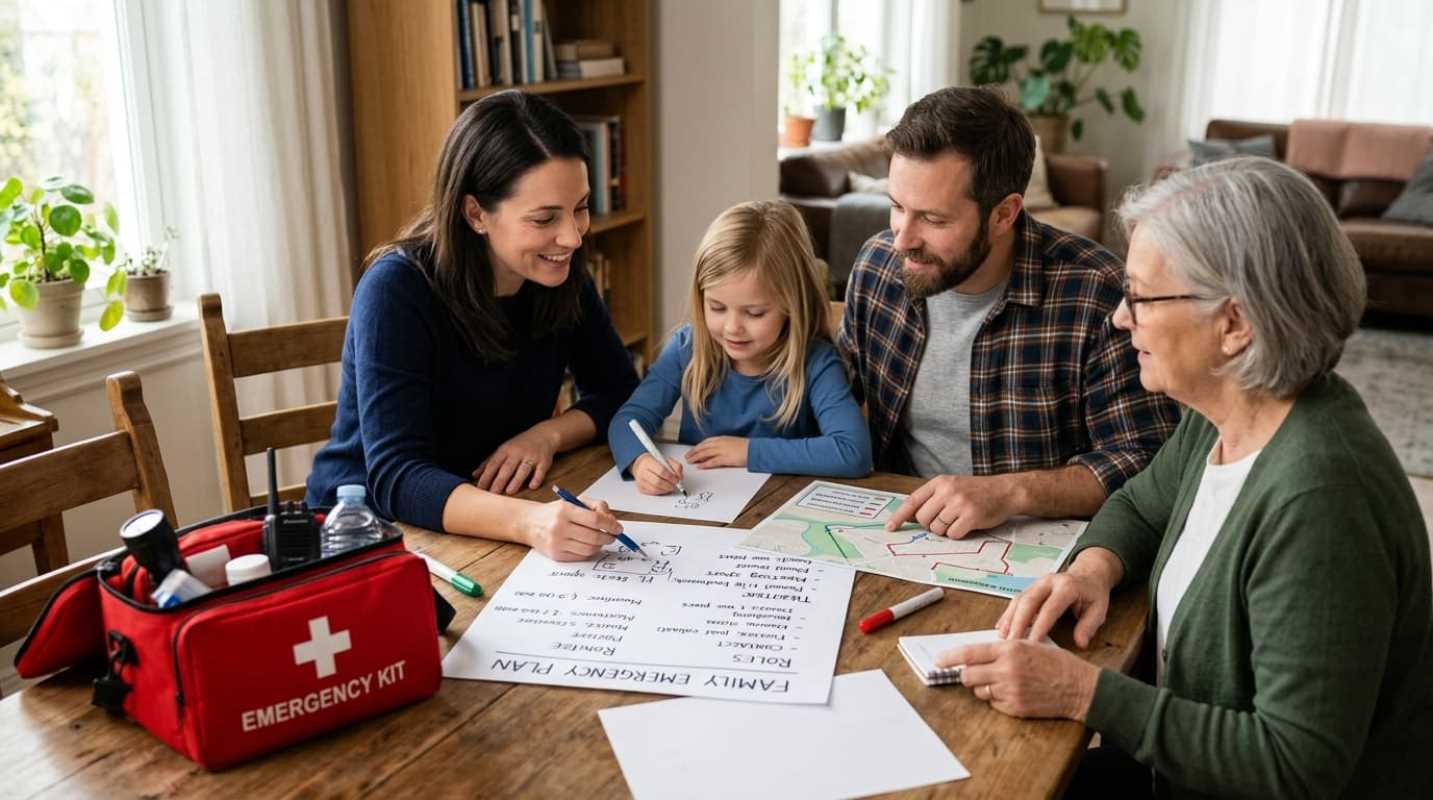
You do not have to tackle everything this afternoon. Start by sitting down at the kitchen table tonight for ten minutes. Write down your out-of-area contact, choose your neighbor's mailbox as your meeting spot, and talk your kids through the basics. Taking that simple step today gives your whole family real security tomorrow.
Sources:
1. FEMA National Household Survey Findings
https://buckhorncliffs.com/guides/femas-2024-national-household-survey/
2. Are Americans Prepared for Disasters? FEMA Survey Reveals Key Findings
https://riskandresiliencehub.com/are-americans-prepared-for-disasters-femas-survey-reveals-key-findings/
3. Red Cross Offers Home Fire Preparedness Tips
https://redcrosscentralcalifornia.com/2021/10/04/red-cross-offers-home-fire-preparedness-tips-during-national-fire-prevention-week/
*This article on Folloquy is for informational and educational purposes only. Readers are encouraged to consult qualified professionals and verify details with official sources before making decisions. This content does not constitute professional advice.*