Have you ever stayed in a spare bedroom that felt like an afterthought? You know the kind. It has mismatched floral sheets from a decade ago, a closet crammed with holiday decorations, and an ironing board leaning precariously against the nightstand. It makes you feel less like a welcomed guest and more like an inconvenience squeezing between someone else's stored belongings.
Hosting family or friends shouldn't feel like an exercise in makeshift accommodations. When you set up an intentional, calm space for your visitors, you change the entire dynamic of their stay. They relax faster, sleep more deeply, and feel genuinely cared for from the moment they put their bags down.
The Art of the First Impression
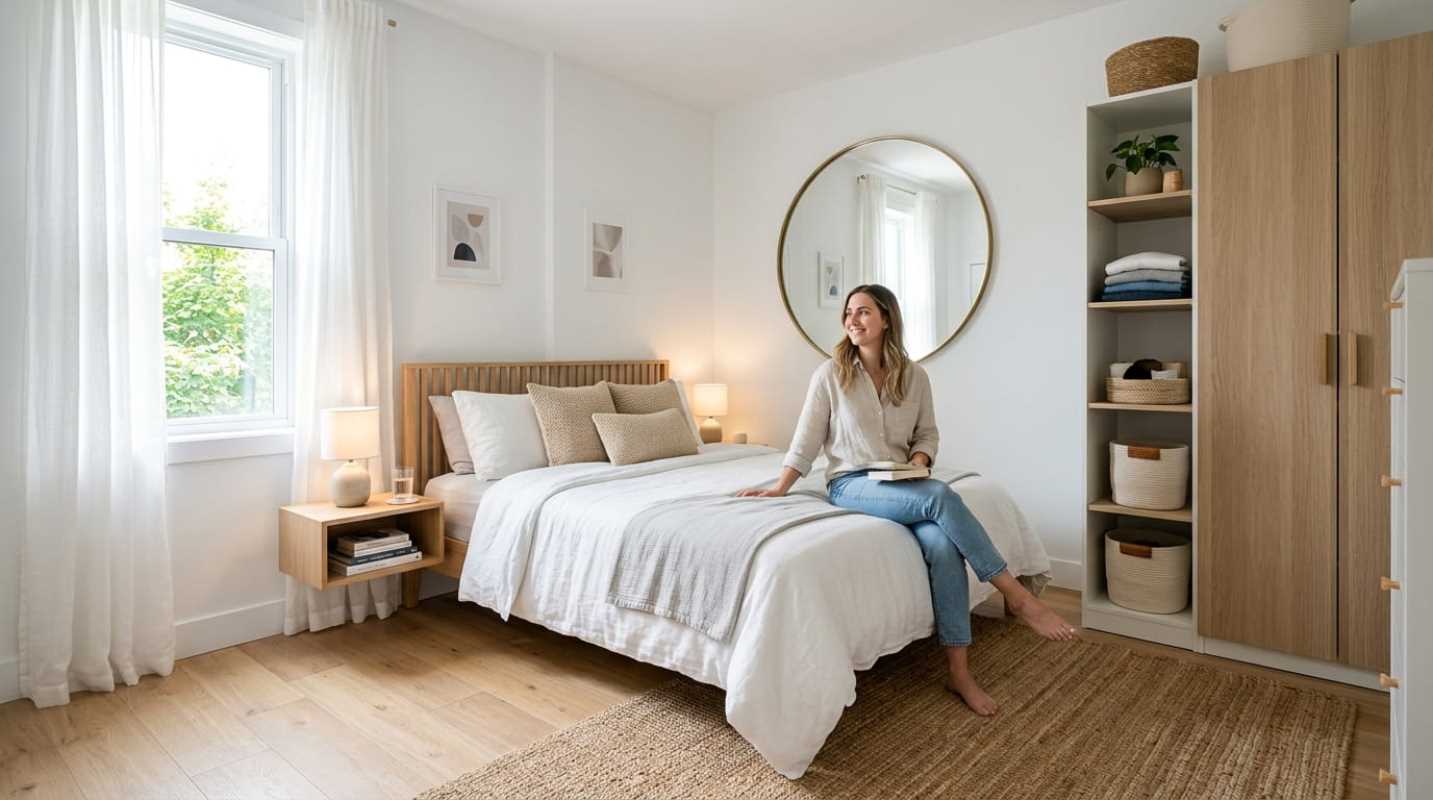
The first five seconds in a room set the emotional tone for a whole trip. When guests push the bedroom door open, they should immediately sense cleanliness, order, and calm. Think of it like walking into a thoughtfully designed boutique hotel where everything has a clear purpose.
Residential hosting has shifted dramatically over the past couple of years. People are moving away from treating guest rooms as flex-storage rooms with a mattress tucked in the corner. Instead, hosts want to create dedicated, quiet retreats.
This shift mirrors a wider cultural obsession with sleep and restorative travel. In recent hospitality studies, travelers cited resting and recharging as their primary motivation for getting away, with 40 percent booking trips specifically based on where they expect better rest.¹ When you offer a private, beautiful room, you give your guests an oasis where they can decompress without feeling like they are intruding on your daily routine.
Prioritizing Hotel-Style Comfort Amenities
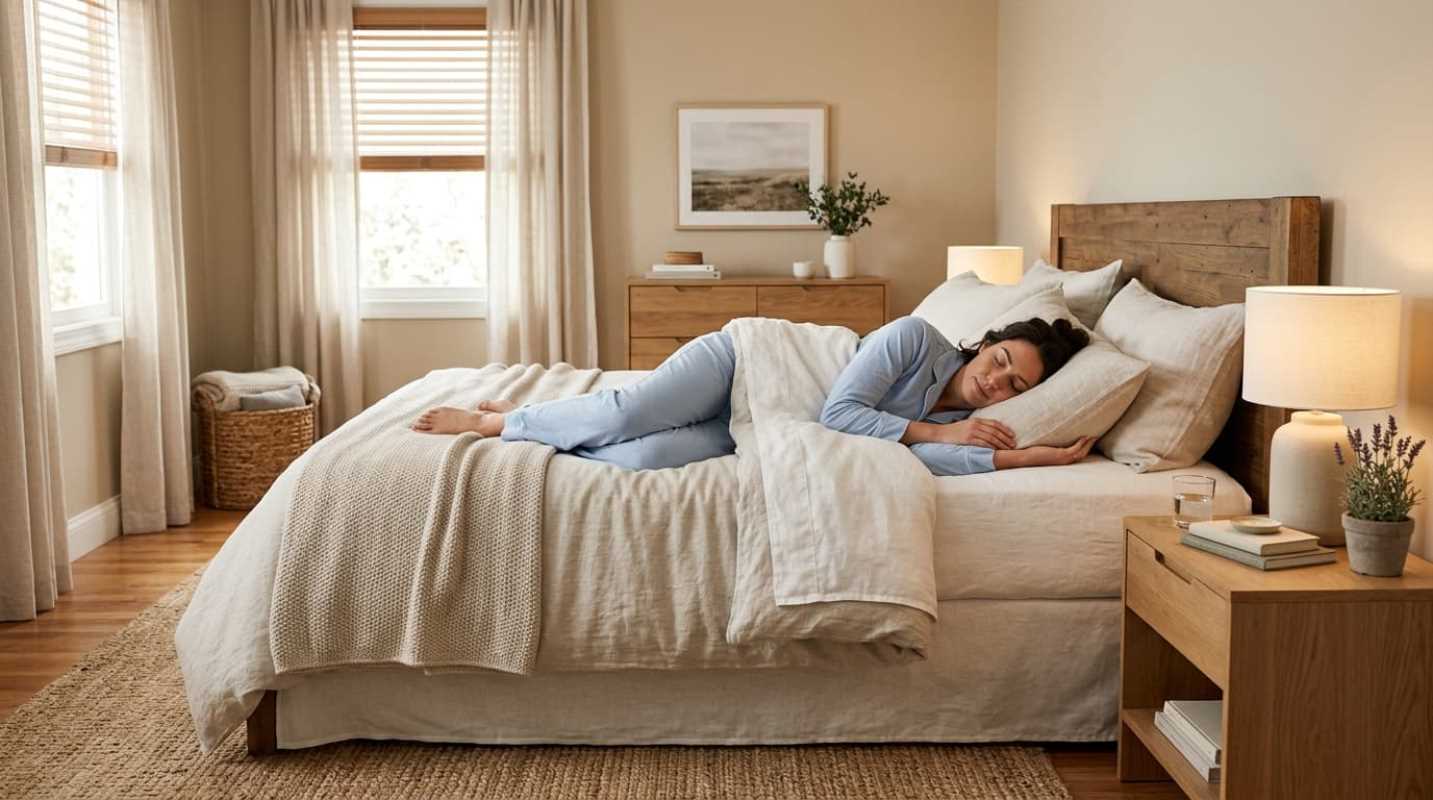
If you want your guests to rave about their visit, focus on the bed. The bed anchors the entire room, functionally and visually. Global hospitality data shows that nearly two-thirds of Americans report sleeping better in hotels than in their own homes.² Why? Hotels remove visual noise, manage room climate, and invest in quality bedding.
Many travelers even plan time to just lounge around in bed all morning. The Scottish call this "hurkle-durkling," and younger travelers in particular embrace it as a needed vacation ritual. If your guests are going to spend hours under the covers, those layers need to feel exceptional.
You don't need a thousand-dollar designer setup to achieve that hotel-grade sleep experience
• Quality over thread count: Skip the marketing trap of four-digit thread counts. Go with 300 to 400 thread-count long-staple cotton instead. Choose crisp percale if you want a cool, matte feel, or sateen if you prefer a silky, smooth drape.
• A mini pillow menu: People have wildly different sleeping styles. Provide two pillows per guest with varying densities. Pair one medium-firm supportive pillow with one plush, malleable down or down-alternative option.
• Layered temperature control: Sleep researchers emphasize that the human body rests best in a cool room, ideally between 65 and 68 degrees. Keep the room cool and give your guests layered bedding. A breathable top sheet, a medium-weight duvet, and an accessible knit throw blanket allow them to adjust their own temperature without having to ask you to tweak the thermostat.
Mastering the Details with Thoughtful Touches
The difference between an ordinary stay and a memorable one usually comes down to small, friction-free details. When you anticipate what a traveler needs before they have to ask, you eliminate those slightly awkward moments, like tiptoeing down dark hallways in pajamas looking for water.
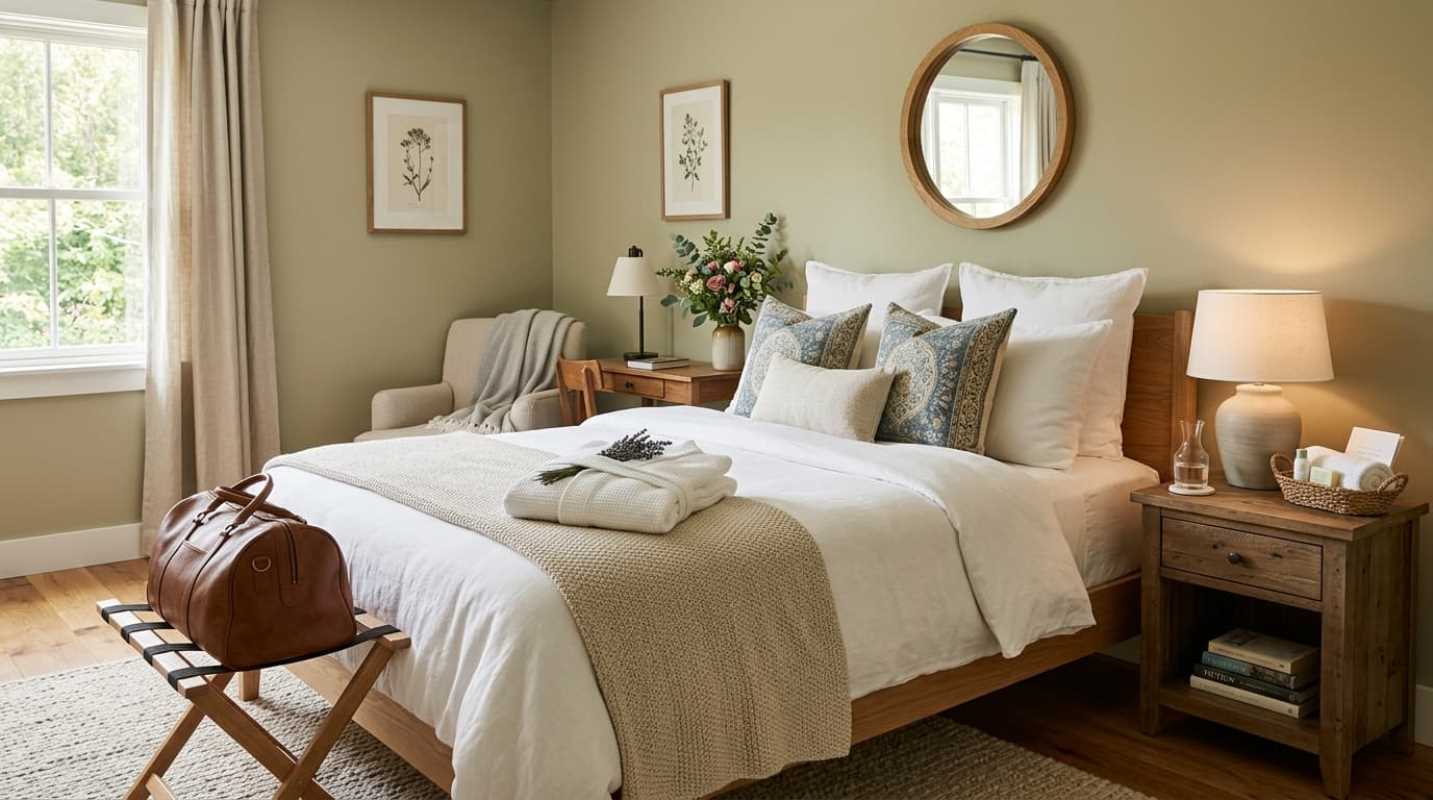
Stocking a few strategic conveniences turns a basic bedroom into a luxury suite
• Luggage rack: Most short-stay guests live out of their suitcases. Without a dedicated stand, luggage ends up on the floor or on your clean duvet. A simple folding wooden rack or a sturdy bench keeps bags open, accessible, and off the bed.
• Zero-awkwardness Wi-Fi sign: Place a small, framed card on the nightstand with a scannable QR code. Your guests can point their phone camera at it and connect instantly without typing a messy 24-character router code.
• Bedside hydration station: Place a glass carafe of filtered water and two covered glasses by the bed. It saves nighttime trips to the kitchen and shows real care.
• Backup toiletry kit: Put a small woven basket in the guest bath or on the dresser with travel needs. Stock it with spare toothbrushes, toothpaste, makeup remover wipes, dental floss, and pain relievers.
• Bedside power hubs: Make sure both sides of the bed have visible, accessible outlets. A charging pad that handles phones and watches without hunting behind heavy furniture makes a huge difference.
Clearing Space for Guest Belongings and Privacy
The fastest way to make someone feel unwelcome is to give them nowhere to unpack. If your closet is packed with off-season coats and the dresser drawers are full of old cables, your visitors will feel like temporary squatters.
Start by carving out actual breathing room. Clear out at least one full dresser drawer and wipe it clean. In the closet, slide your own items to one side and hang six to eight matching wooden or slim velvet hangers. Steer clear of cheap wire hangers, which can ruin delicate fabrics and look cluttered.
Privacy also relies on physical boundaries. Provide a full-length mirror paired with good lighting so your guests can dress and check their outfits comfortably inside their room. Keep bedside tables mostly bare, leaving at least 18 inches of open space for a phone, a book, and a glass of water. A clutter-free surface instantly signals peace.
The Final Flourish to Make Guests Feel at Home
Once you have the needs covered, look at the sensory atmosphere. Hospitality research shows that sleep tourism has grown into an industry worth well over 70 billion dollars, driven by travelers seeking dark, peaceful environments.³ You can create that exact feeling in your own home with just a few atmospheric adjustments.
First, tackle light and sound. Hang blackout curtains high and wide across the window frame to stop morning light leaks. Add a simple white-noise machine on the dresser to blur the sound of creaky floorboards, morning coffee grinders, or early morning street traffic.
Next, add subtle, natural touches. Skip harsh synthetic room sprays or overpowering scented candles that can trigger headaches or allergies. Instead, choose clean air, a hint of eucalyptus, or a low-maintenance houseplant like a snake plant or ZZ plant. A small vase of fresh garden clippings on the dresser paired with a short, handwritten welcome note offers warmth without costing a fortune.
Before your next visitor arrives, step into the room, close the door, and spend ten minutes sitting on the bed. Is the reading lamp within easy reach? Can you turn off the main lights without getting up? Is the temperature right? If the space feels relaxing to you, you can rest easy knowing your guests will feel right at home.
Sources:
1. Hilton Shares Key Insights on Sleep Tourism
https://stories.hilton.com/emea/wellness/hilton-shares-key-insights-on-sleep-tourism
2. Hilton Travel Trends 2025
https://www.hoteldive.com/news/hilton-travel-trends-2025/728523/
3. Sleep Tourism Market Size and Trends
https://www.grandviewresearch.com/industry-analysis/sleep-tourism-market-report