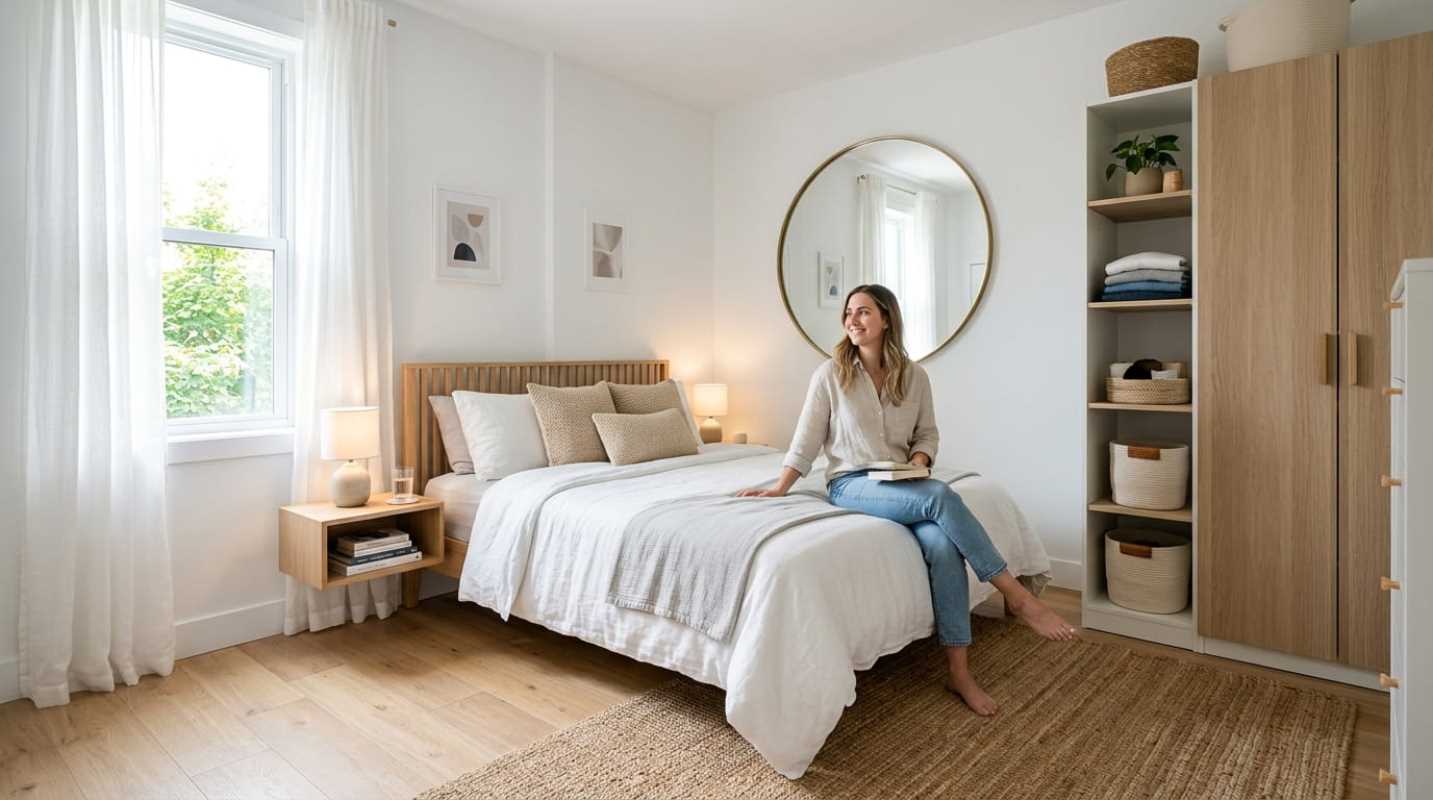
Have you ever walked into your bedroom at the end of a long day, crawled under the covers, and immediately felt your mind start racing? You're exhausted, yet the moment your head hits the pillow, your brain decides it is time to replay every conversation from the past week.
You aren't alone. Data from the Centers for Disease Control and Prevention indicates that roughly 30.5% of adults sleep less than the recommended seven hours every night.¹ Although we often blame stress, caffeine, or packed schedules, we tend to overlook the space where sleep is supposed to happen. Your bedroom is either pulling you toward rest or silently fighting against it.
When your bedroom doubles as a home office, a movie theater, and a laundry sorting station, your brain gets confused. It treats the space as an arena for problem-solving rather than recovery. Transforming your bedroom into a dedicated sanctuary isn't an expensive luxury project. It is a practical shift that protects your health, sharpens your focus, and gives you back your mornings.
The Science of Color Psychology and Soothing Interior Design
The visual tone of your room sets your neurological baseline before you even close your eyes. Specialized retinal cells in your eyes register ambient color wavelengths and send signals directly to your autonomic nervous system. Bright, highly saturated shades trigger daytime alertness, while muted, low-saturation tones encourage your body to shift into a relaxed state.
Wall color plays a measurable role in how long you stay asleep. Real-world sleep duration surveys show that people sleeping in soft blue rooms average 7 hours and 52 minutes of sleep per night.² Earthy sage greens come in a close second, averaging 7 hours and 36 minutes, thanks to their calming connection to the outdoors. On the flip side, high-saturation colors backfire. Active purples, like, average just 5 hours and 56 minutes of sleep because they stimulate mental activity when you need quiet.
Paint finish matters just as much as shade selection
• Soft muted blues: Lower your heart rate and ease your blood pressure before bed.
• Earthy sage greens: Provide a grounding aesthetic that reduces visual stress.
• Warm greiges and taupes: Offer gentle warmth without the sterile glare of stark white walls.
• Flat or matte sheens: Absorb light rather than bouncing distracting glare across the room.
Pair these wall colors with soft, breathable materials. Washed linen, percale cotton, and layered wool throws soften room acoustics and invite physical comfort. When you walk in, the room should visually tell your nervous system that work is done for the day.
Mastering Light-Blocking and Temperature-Control Approaches
Light is the primary cue that sets your internal biological clock. Even microscopic amounts of light during the night disrupt your rest. Research shows that exposure to dim ambient light between 5 and 10 lux during sleep disrupts melatonin release and elevates resting heart rate.³ To put that into perspective, 10 lux is about the amount of light that slips past standard window blinds from an outdoor streetlamp.
True darkness requires planning
• True blackout window coverings: Install cellular blackout shades with side tracks or hang dense, floor-length blackout curtains to stop perimeter light leaks.
• Low-kelvin evening lighting: Switch bedside bulbs to warm amber or red spectrums under 2700K, which do not trick your brain into thinking it is noon.
• Display dimming film: Place small pieces of blackout tape over glowing standby lights on air purifiers, televisions, and smoke alarms.
• Floor-level pathway lights: Use motion-activated, red-spectrum nightlights near the floor for late-night bathroom trips instead of flicking on harsh overhead bulbs.
Then there is the temperature question. Have you ever tried sleeping in a hot, stuffy room? You end up tossing and kicking blankets off all night. Clinical sleep research points to the best sleeping room temperature around 65 degrees Fahrenheit, within a range of 60 to 67 degrees. Your core body temperature must drop by a couple of degrees to initiate and maintain deep sleep. A cool room assists this natural biological drop, while a hot room keeps you trapped in light, fragmented rest.
Acoustics matter too. Ambient noise above 30 decibels causes micro-arousals that pull you out of deep sleep cycles, even if you do not fully wake up. If you live in an urban neighborhood or have noisy plumbing, a continuous sound machine running pink or brown noise creates a steady sonic blanket that softens sudden disruptions.
Digital Detox and Eliminating Clutter for a Restful Sanctuary
Let's address the elephant in the room: our screens. A national poll from the American Academy of Sleep Medicine revealed that 87% of adults keep their phones in their bedroom, and roughly 70% use personal devices while in bed.
Bringing an active screen into bed is like inviting a crowded coffee shop into your sheets. It isn't just about blue light delaying melatonin. It's about cognitive stimulation. Answering late-night emails or scrolling news feeds spikes dopamine and cortisol. A large study published in Frontiers in Psychiatry found that every extra hour of screen time after getting into bed raises the odds of insomnia symptoms by 59%.
Clutter creates a similar psychological drag. Piles of unfolded clothes and stacks of mail act as physical reminders of unfinished chores. When your eyes land on clutter, your brain processes subtle task-oriented anxiety.
Here is how to create clean boundaries
• Set a 45-minute digital curfew: Power down tablets, laptops, and televisions at least 45 minutes before turning out the light.
• Establish an out-of-reach charging station: Plug your phone in across the room or out in the hallway so you cannot mindlessly reach for it.
• Buy an analog alarm clock: Rely on a simple clock to wake up so you do not reach for a screen first thing in the morning.
• Strip down nightstand clutter: Keep only a lamp, a book, and a glass of water on your bedside table.
• Tame sleep tracker obsession: If checking your wearable sleep score gives you morning anxiety, take the watch off at night or turn off its real-time notifications.
Curating Your Sleep Rituals
A calming bedroom works best when paired with steady routines. Your physical surroundings and your habits build a feedback loop. When you repeat the same gentle actions in the same relaxing environment, your brain learns that sleep is coming.
Begin dimming overhead fixtures two hours before sleep. Turn on a bedside lamp with warm light, switch on your sound machine, and consider using a needed oil diffuser with cedarwood or lavender. Spend twenty minutes reading fiction or journaling on paper.
Protect the bed itself. Reserve it exclusively for sleep and intimacy. When you work from bed with a laptop on your knees, you train your brain to associate your mattress with deadlines and problem-solving. Keep work at a desk, and let your bed remain a quiet refuge.
Ready to upgrade your space? These practical additions make a noticeable difference in light control, acoustic comfort, and air quality.
Investing in Your Sleep Future
Upgrading your bedroom is one of the most effective ways to support your physical health and mental clarity. High-quality rest improves immune function, balances mood, and sharpens daily performance.
You don't need to remodel your entire home this weekend to feel a difference. Start with one simple change tonight. Lower your thermostat to 65 degrees, cover up an annoying power light with tape, or plug your phone in across the room. Small adjustments add up fast, turning your bedroom into the restorative space you deserve.
Sources:
1. National Sleep Authority
https://nationalsleepauthority.com/sleep-environment-and-bedroom-optimization/
2. Cozy Home Decore
https://cozyhomedecore.com/bedroom-colors-for-sleep/
3. Sleep Foundation
https://www.sleepfoundation.org/bedroom-environment/light-and-sleep
*This article on Folloquy is for informational and educational purposes only. Readers are encouraged to consult qualified professionals and verify details with official sources before making decisions. This content does not constitute professional advice.*