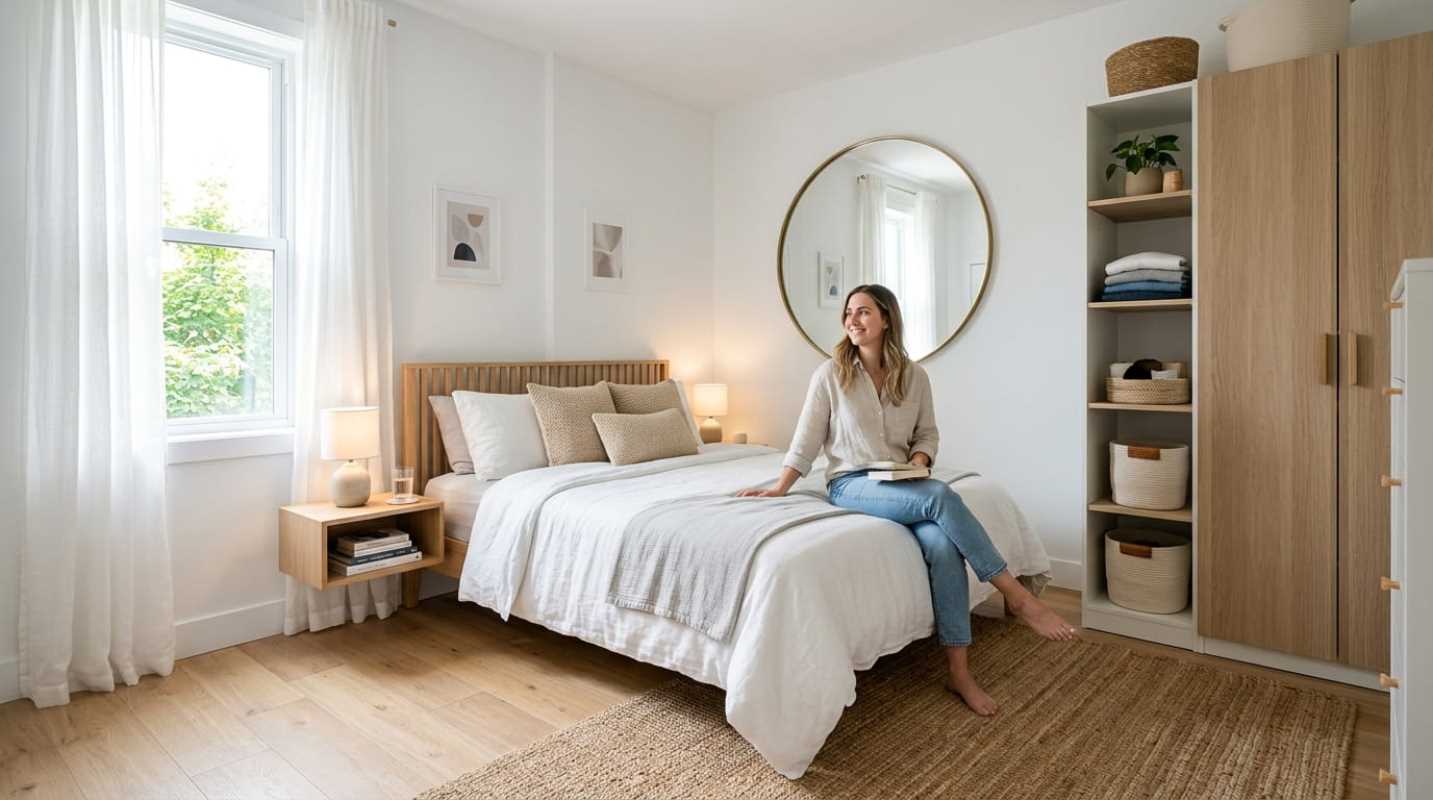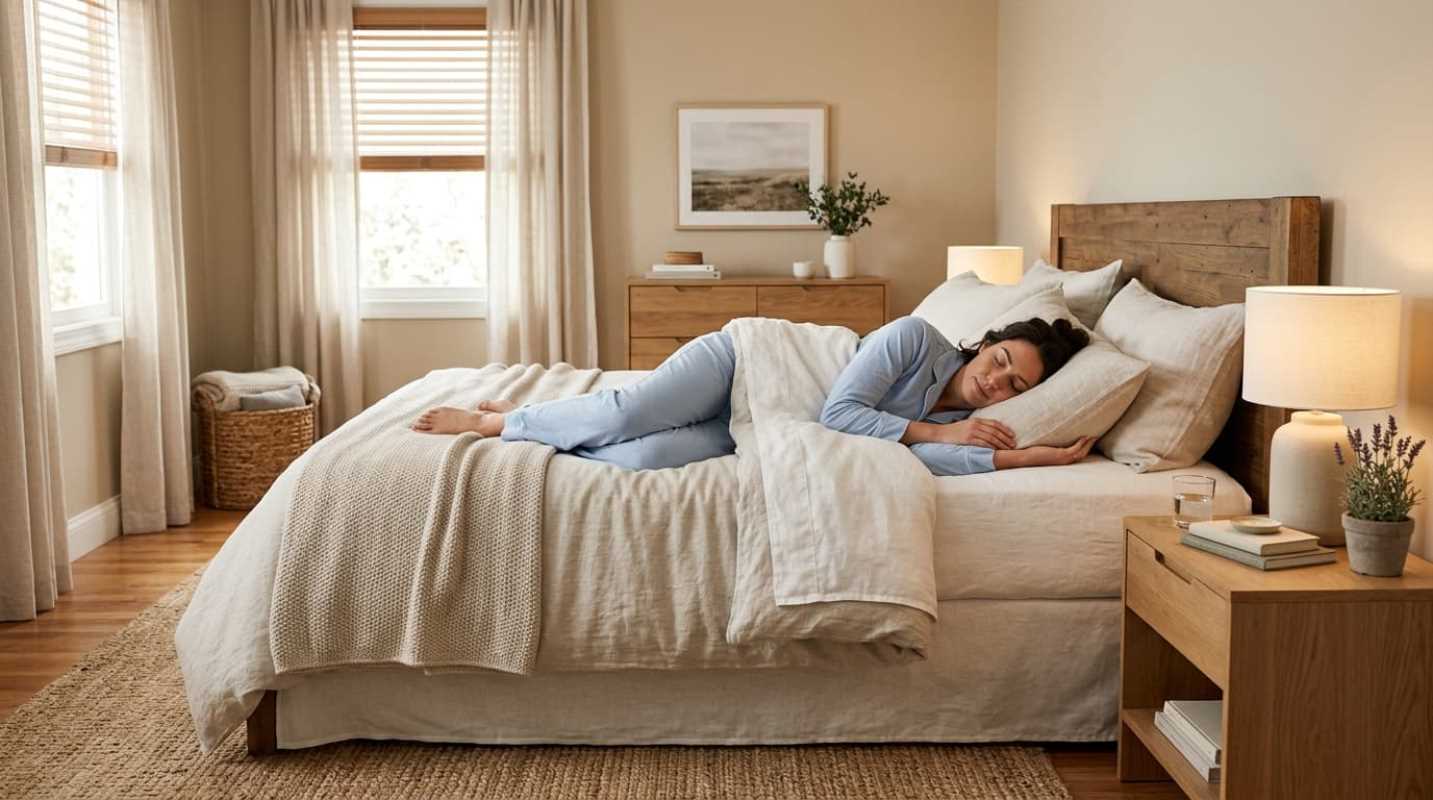
Have you ever walked into your living room, taken one look at the piles of mail, stray shoes, and half-sorted laundry, and immediately felt like taking a nap instead? You are definitely not alone. Around 40% of adults report feeling actively overwhelmed by visual disorganization in their living spaces.¹ Most of us were taught that dealing with clutter requires an epic weekend marathon. You drag everything out of your closets, dump it in the middle of the floor, and vow to power through.
Then 3:00 PM hits. You are exhausted, hungry, and sitting in a room that looks ten times worse than when you started. That is where burnout wins.
There is a much better way to handle your stuff. By understanding why clutter stresses your brain and adopting small, bite-sized habits, you can create a calm home without ever spending an entire Saturday trapped in organizing purgatory.
The Psychology of Clutter: Why Less is More
Clutter is not just an aesthetic issue. It is a genuine environmental stressor.
Neuroscience researchers at the Princeton Neuroscience Institute found that multiple physical objects in your field of vision compete for neural representation in your visual cortex. In plain English: every single stray item acts like an open browser tab in your mind. Your brain constantly spends energy tracking those objects, which drains your working memory and ruins your focus.
Living in chronically messy spaces can bump your baseline levels of the stress hormone cortisol up by 18% to 25%.⁶ For many people, especially women who handle household duties, domestic clutter gets internalized as a silent, screaming to-do list. The evening cortisol drop that should help you unwind simply fails to happen.
To break the cycle, start viewing decluttering as an act of self-care rather than another hated household chore. You are giving your nervous system a quiet place to land.
You also have to tackle the cognitive traps that keep useless items trapped in your home
• The Sunk Cost Fallacy: You keep an uncomfortable pair of boots because you spent $150 on them three years ago. The money is already gone. Keeping the boots in your closet will never bring that cash back into your bank account.
• The Endowment Effect: Behavioral economist Richard Thaler pointed out that we naturally value items more simply because we own them. That free tote bag suddenly feels valuable just because it sits in your hallway.
• Ego Depletion: Every item demands a micro-decision. After evaluating fifty items in a row, your executive function runs out of steam, and you end up shoving everything back into the closet.
Mastering Zone-by-Zone Micro-Decluttering Methods
The secret to making real progress without melting down is micro-decluttering.³ Instead of overhauling an entire room, you shrink your focus down to a tiny, manageable boundary.
You do not need an entire free afternoon. You just need ten minutes and a clear boundary line.
Here are three battle-tested techniques to keep your projects small and sane
• Dana K. White's "No-Mess" Rule: Never pull everything out into a giant pile. Work directly from where things sit. Pick up obvious trash first and throw it away. Then, take items that belong in other rooms to their actual homes right away. If you get interrupted five minutes in, your space is already better than when you started.
• KC Davis's "5 Things" Approach: When a messy room paralyzes you, remember that every room contains only five categories: trash, dishes, laundry, things with a place, and things without a place. Grab a bag and hunt down only the trash. Ignore everything else until the trash is gone. Move to dishes next. Taking it layer by layer protects your brain from sensory overload.
• Capitalizing on "Dwell Time": Use small pockets of built-in waiting time during your normal day. Sort through a single kitchen utensil drawer while your morning coffee brews. Toss expired face creams while your evening sheet mask sets.
Celebrate these small wins. Clearing off just your bedside table gives you an immediate pocket of peace right before you fall asleep. Momentum builds from small victories, not giant purges.
The Golden Rules of Sorting Frameworks
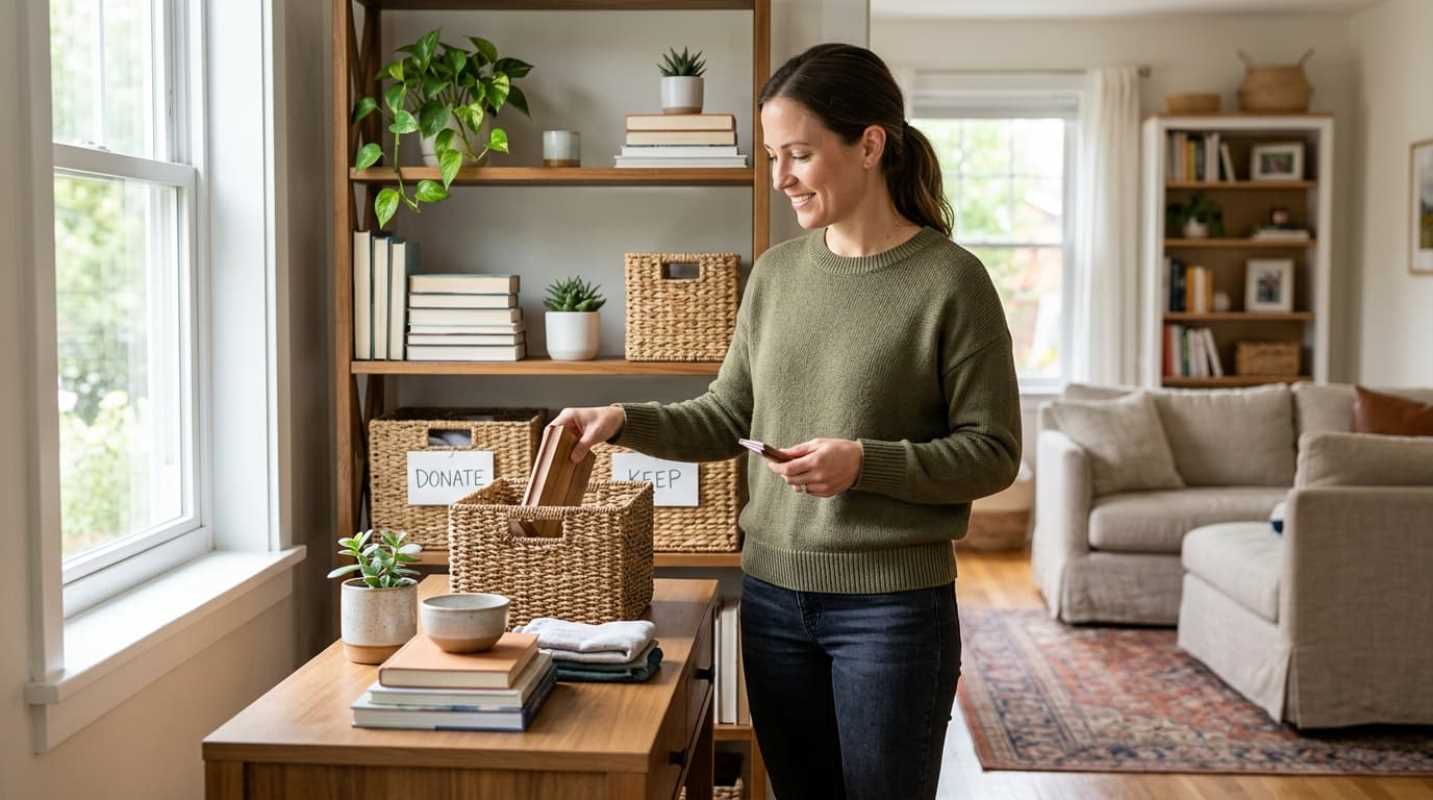
When you sit down to sort through a space, keep your decision-making framework stupidly simple: Keep, Donate, or Discard.
To decide what truly adds value to your life, run borderline items through the 90/90 rule popularized by The Minimalists. Ask yourself: "Have I used this in the past 90 days? If not, will I realistically use it in the next 90 days?" If the answer to both is no, it is probably just taking up valuable real estate in your home.
The hardest part is often parting with sentimental belongings. Your grandmother's china set, old concert ticket stubs, or childhood artwork carry heavy emotional weight.
Try these approaches to lighten that emotional load
• Separate the Memory from the Object: The item is not the person or the memory. Getting rid of an unused ceramic dish your aunt gave you does not erase your love for her.
• Take a High-Resolution Photo: If you want to remember an old high school journal, a sports trophy, or your child's third-grade macaroni art, snap a photo and put it in a digital album. You preserve the visual memory without storing the cardboard box in your attic.
• Pass Items Forward with Low Friction: Avoid letting donation boxes sit in your hallway for four months. Use local "Buy Nothing" groups for quick porch pickups. Snap a photo, set the box outside your front door, and let a neighbor take it away without you ever having to run errands.
Establishing Daily Reset Habits to Prevent Rebuild-up
Decluttering is not a one-and-done event. It is a set of low-effort maintenance habits that keep things from spiraling again.
Start with a simple ten-minute nightly reset. Before heading to bed, set a timer and scan your primary living area. Put the dirty mugs in the sink, fold the sofa throw blanket, and clear off the coffee table. Waking up to clear surfaces immediately sets a calmer tone for your morning.
Next, implement the classic "one-in, one-out" rule. If you buy a new pair of jeans, pick an older, ill-fitting pair to donate. If a new coffee mug enters the kitchen cabinet, an old chipped one leaves. This simple boundary caps your home's total inventory.
Finally, set up simple containment zones for your worst drop zones. Entryways and kitchen counters collect clutter because items lack clear landing pads. Place a decorative tray by the front door for keys and wallets, and keep a small basket on the counter for incoming mail. Treat storage baskets as firm physical limits: once the basket is full, you have to sort through it before adding anything new.
Sustaining a Clutter-Free Lifestyle Long-Term
Keeping your space peaceful requires changing how things enter your home in the first place. Marketing algorithms are designed to convince you that your next purchase will solve your problems, but every physical item you buy extracts a tax in maintenance, dusting, and storage space.
Before hitting checkout on an impulse purchase, give yourself a mandatory 72-hour cooling-off period. Nine times out of ten, the urge passes completely. Shift your personal rewards toward experiences, good food, and digital audiobooks rather than physical trinkets.
Build a maintenance rhythm that naturally fits your personal life. If you have extra energy on Sunday mornings, spend fifteen minutes reviewing the pantry. If you prefer quiet weeknights, clear one shelf while listening to a podcast.
Your home is meant to serve your daily life, not demand constant management. Focus on functional comfort instead of chasing an impossible catalog layout, and permit yourself to clear out your space one tiny drawer at a time.
Sources:
1. Homes and Gardens
https://www.homesandgardens.com/solved/decluttering-challenge
2. Calendar
https://www.calendar.com/blog/micro-decluttering-a-big-impact-from-tiny-steps/
3. Institute for Family Studies
https://ifstudies.org/blog/a-cluttered-home-causes-more-stress-for-women-than-men