Have you ever walked into a room that immediately lifted your spirits, only to realize the secret was simply a wash of bright sunshine? There is something undeniable about what natural light does to our living spaces. It clears away the winter gloom, makes compact rooms feel airy, and turns ordinary corners into inviting retreats.
Natural daylight is easily the most cost-effective home upgrade you can make. Recent real estate surveys show that modern buyers frequently rank window placement and bright exposure higher on their priority lists than extra square footage.¹ On top of the mood boost, letting the sun do the heavy lifting trims real money off your utility bills. According to the U.S. Department of Energy, taking advantage of natural daylight can cut your electric lighting consumption by 20% to 40%.⁵
The best part? You don't need a sledgehammer or an expensive contractor to brighten up your home. A few thoughtful, low-effort changes can completely shift your indoor environment.
Clear the Path with Outdoor Fixes and Routine Cleaning
Before you think about repainting or buying new accessories, look straight at your windows. Over time, layers of dust, pollen, and water spots build up on the glass. You might not notice the grime day to day, but building maintenance data shows that dirty exterior glass can quietly block 10% to 15% of visible daylight.
Grabbing a squeegee and washing both sides of your glass produces an instant difference. Once the glass is clean, step outside into your yard and take a good look at your landscaping.
• Trim encroaching branches: Trees and bushes that grow within two to three feet of your window frames cast heavy shadows. Keep them pruned back to allow sun rays a clear path indoors.
• Eliminate green casts: When leafy plants press directly against glass, they don't just block lumens. They also project a murky green tint into your living space, muting the warm glow of natural light.
• Clear the exterior sills: Keep window sills free of outdoor planters or overgrown vines that steal morning sunshine.
The Art of Strategic Interior Reflection
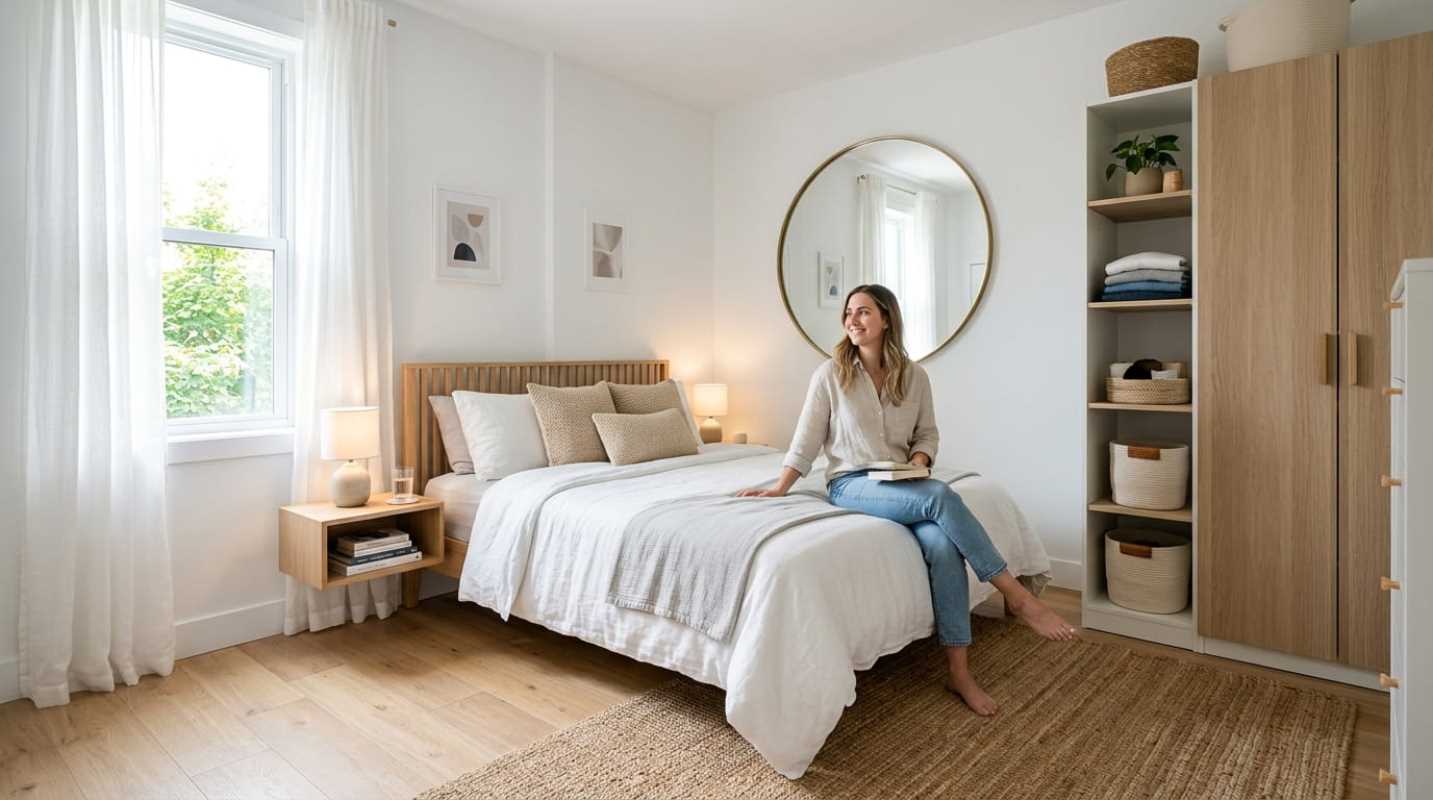
Think of light as something you can catch and redirect throughout your house. Mirrors are your best friends here, but where you hang them makes all the difference. Many people hang a large mirror directly across from a south-facing window, only to end up with harsh glares and uncomfortable hot spots.
Instead, try positioning mirrors on perpendicular walls at a 90-degree angle to the window. This catches the sunlight as it pours inside and bounces it across the darker, recessed axes of your room without blinding anyone on the couch.
You can also use mirrors to trick the eye. In a dark hallway or a windowless breakfast nook, try mounting an arched or grid-paneled mirror on the wall where daylight lands. Your brain instinctively reads the reflection as an actual exterior window, doubling the perceived depth of the room.
Beyond wall hangings, incorporate furniture and accents that create subtle reflections
• Metallic accents: Swap dull hardware for polished brass, warm nickel, or chrome accents that sparkle in incoming light.
• Glossy surfaces: Try glazed ceramic lamps, high-gloss accent tables, or lacquered trays on your coffee table.
• Transparent furniture: Consider pieces made of glass, lucite, or acrylic. Because light passes straight through them, they keep sightlines open and prevent heavy visual weight.
Window Treatments That Let the Sunshine In
Are your current curtains doing more harm than good? Heavy velvet drapes and dark, thick fabrics swallow daylight whole. In fact, poorly hung curtains can block up to 40% of incoming light even when they are pulled wide open.
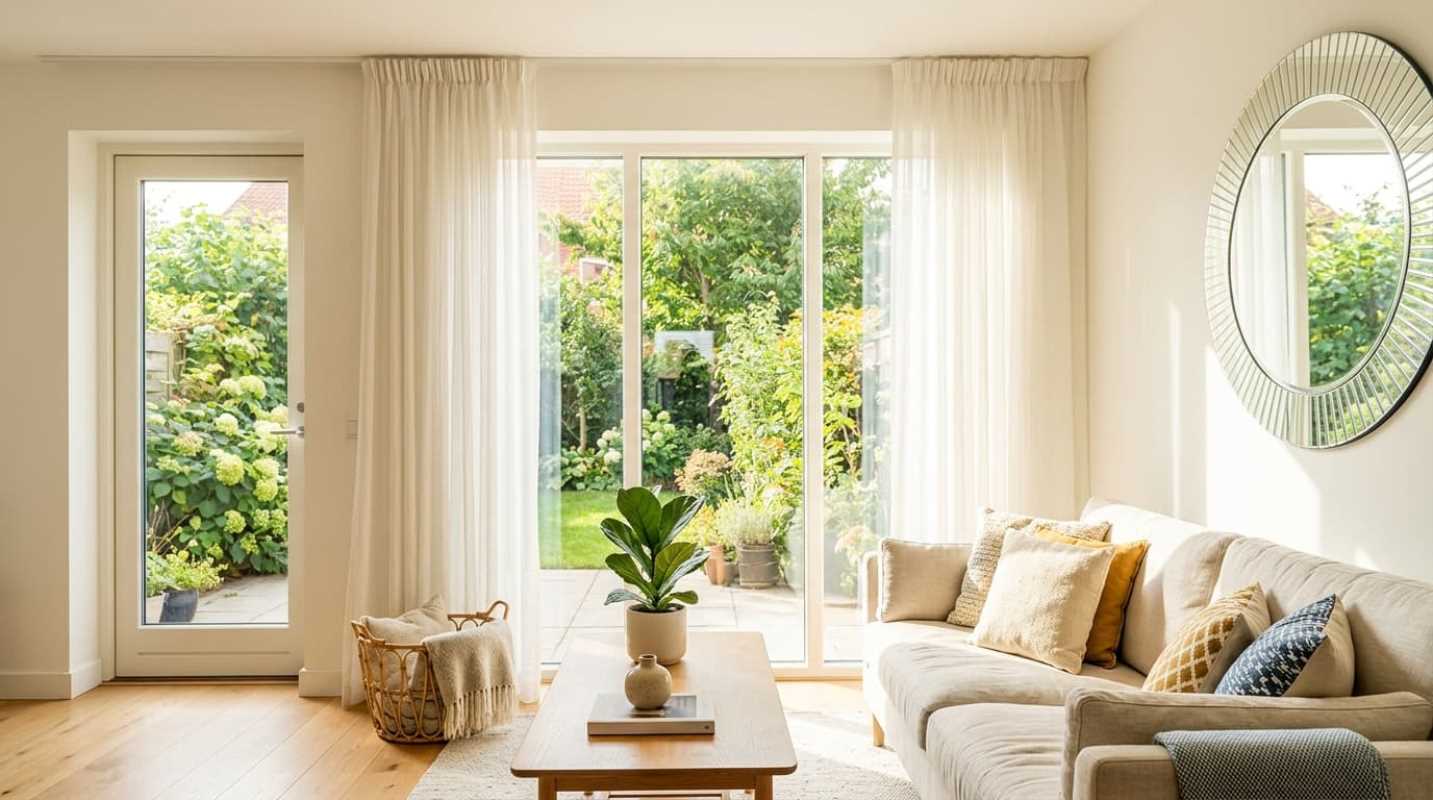
A clever design trick is the high and wide rule. Mount your curtain rods four to six inches above the window frame, or right below the ceiling trim. At the same time, extend the rod eight to twelve inches past the sides of the frame. When you pull the curtains open during the day, the fabric stacks completely against the drywall, leaving every single inch of glass exposed.
For fabric choices, lightweight textiles make a world of difference
• Sheer linen and cotton: Translucent linen drapes soften harsh direct sun while letting up to 80% of daylight filter into your living areas.
• Top-down bottom-up shades: If you live on a busy ground floor or an urban street, these shades are a lifesaver. You can lower the top portion to flood your ceiling with light while keeping the bottom covered for privacy.
• Solar roller shades: Modern weave shades cut solar heat and UV glare without plunging your home into total darkness.
Color Palettes and Spatial Flow
Paint is an incredible tool for brightening a space, but you have to look at the numbers on the back of the swatch. Paint makers rate colors by Light Reflectance Value (LRV), measured on a scale from 0 to 100. Pure black absorbs all light at 0, while pure white bounces everything at 100.
For interior walls, aim for an LRV between 65 and 85. Every ten-point jump in LRV creates a noticeable leap in room brightness. You should also consider which way your room faces. North-facing rooms receive cool, grayish light, so they feel cozier with warm-toned off-whites. South-facing rooms get bright, warm light all day, which balances well with crisp, cool whites or pale stone hues.
Pay attention to paint sheens and furniture layouts as well
• The ceiling brightness trick: Paint your ceiling flat white with an LRV of 85 or higher. A bright ceiling acts like a reflector, pushing ambient daylight back down into the room.
• Satin finishes on trim: Flat paint absorbs light, while satin or semi-gloss finishes bounce it. Using satin paint on baseboards, doors, and window trim helps catch daylight as it enters.
• Low-profile furniture: Bulky, high-backed couches placed right beside a window block light from traveling across the floor. Stick with low-slung silhouettes and open-leg furniture that let sunshine flow through.
• The three-foot perimeter: Keep the floor area directly in front of your main windows clear of clutter. Letting sunlight strike the bare floor allows it to bounce upward into the rest of the room.
Embracing a Brighter Living Space
You don't need a massive remodel or an architectural overhaul to enjoy a home bathed in sunlight. Brightening your home is really about taking inventory of what is currently blocking the sun and clearing a path for it.
Start small this weekend. Clean your windows, trim back a couple of overgrown branches outside, and nudge that heavy armchair a few feet away from the glass. Once you start noticing how the light travels across your floors and walls, you can bring in sheer curtains, position a mirror, or brush a fresh coat of high-LRV paint on the walls. Step by step, you will build a bright, open space that feels wonderful to live in every single day.
Sources:
1. Natural Light in Homes
https://akerdevelopment.com/natural-light-in-homes-2025/
2. Daylighting and Electric Lighting Integration
https://www.energy.gov/cmei/ssl/daylighting-and-electric-lighting-integration