Think of your front entryway as the airlock between the chaos of the outside world and the peace of your home. You cross the threshold, drop your bags, kick off your shoes, and take a breath. Or at least, that is how it should feel.
For many of us, the reality looks completely different. You step inside, trip over a stray sneaker, and balance mail on an overflowing table. That immediate visual mess spikes your blood pressure before you even take off your coat.
Your foyer is easily the hardest-working space in the house. Real estate staging research shows that guests and buyers form an emotional read on an entire property within just 30 to 60 seconds of walking through the door.² If the entrance feels cramped, the rest of the home feels small too. Creating a practical space right at the front door removes that daily friction and sets a calm tone for everyday life.
Mastering the Drop Zone for Shoes, Bags, and Keys
The old habit of using a spindly, open console table to hold daily clutter is officially out.¹ Open surfaces act like clutter magnets. When every piece of mail, receipt, and set of car keys sits out in the open, your entryway never looks tidy.
To make your drop zone work without eating up valuable floor space, focus on vertical storage and smart containment. Professional organizers often rely on an 80/20 storage rule. Aim for 80 percent closed storage to hide everyday gear, and save the remaining 20 percent for a clean tray or a single piece of decor.
• Ultra-slim shoe cabinets: Wall-mounted, tilt-out shoe organizers project only 6 to 9 inches into the room. They hold multiple pairs of footwear vertically behind closed doors, keeping your hallway completely clear.
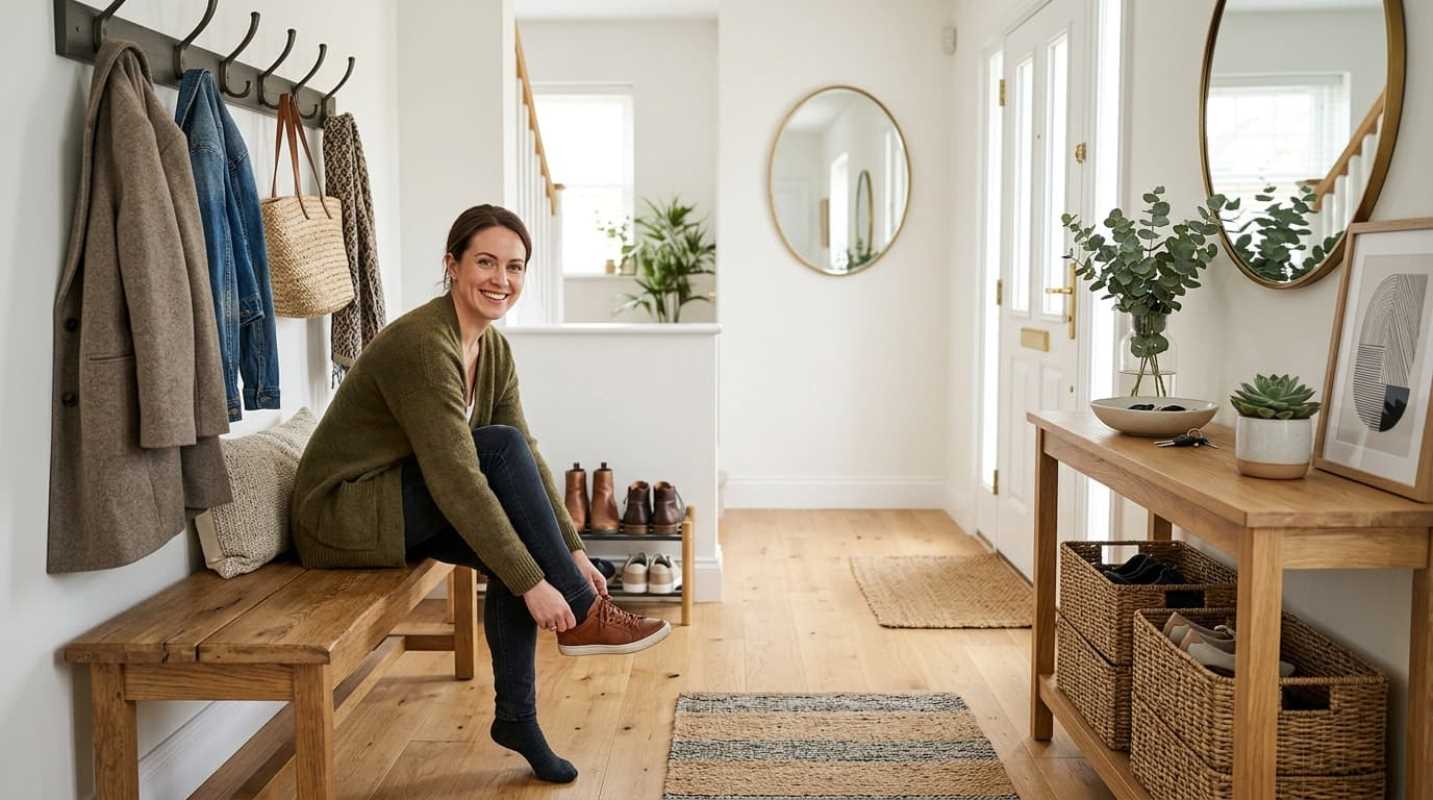
• Two-tier wall hooks: Coat trees take up too much floor space and tip over easily. Instead, hang a dual-height hook rail along your wall. Place the top rail at 60 to 66 inches for long coats and adult bags. Install a second rail at 36 to 42 inches so kids can hang their own backpacks, or you can loop dog leashes within easy reach.
• Dedicated tech drawers: Rather than leaving charging cables sprawled across a table, use a shallow drawer lined with felt. Add an internal charging pad for your phone and key fob so items charge out of sight.
• Floating shelves and consoles: Wall-mounted floating pieces keep the floor visible beneath them. Seeing unbroken flooring tricks your eyes into reading a narrow entry as much wider than it really is. It also gives you a clear spot underneath for a boot tray.
Comfort Meets Utility with Seating Solutions
Have you ever tried balancing on one foot while wrestling a stubborn boot onto the other? It is an awkward dance that nobody enjoys. Having a place to sit while putting on or removing shoes makes your entrance infinitely more comfortable for both kids and guests.
Standard functional benches sit between 18 and 19 inches high. In a tight hallway, deep furniture will block your path and cause bruised hips. Look for slim profiles that stay between 10 and 14 inches deep.
Curved and pill-shaped benches work especially well in narrow pass-throughs. Rounding off the corners softens your walking path and keeps traffic moving smoothly.
Look for seating that doubles as hidden storage. Benches with lift-up tops or lower cubbies holding woven baskets let you tuck away seasonal items like winter scarves or dog towels without adding extra furniture.
Material Matters with Durable Flooring and Easy-to-Clean Walls
Because the entrance sees the heaviest friction, dirt, and wet weather in the house, picking the right surfaces makes a huge difference in how clean the room stays. You want finishes that can take a beating and wipe down in seconds.
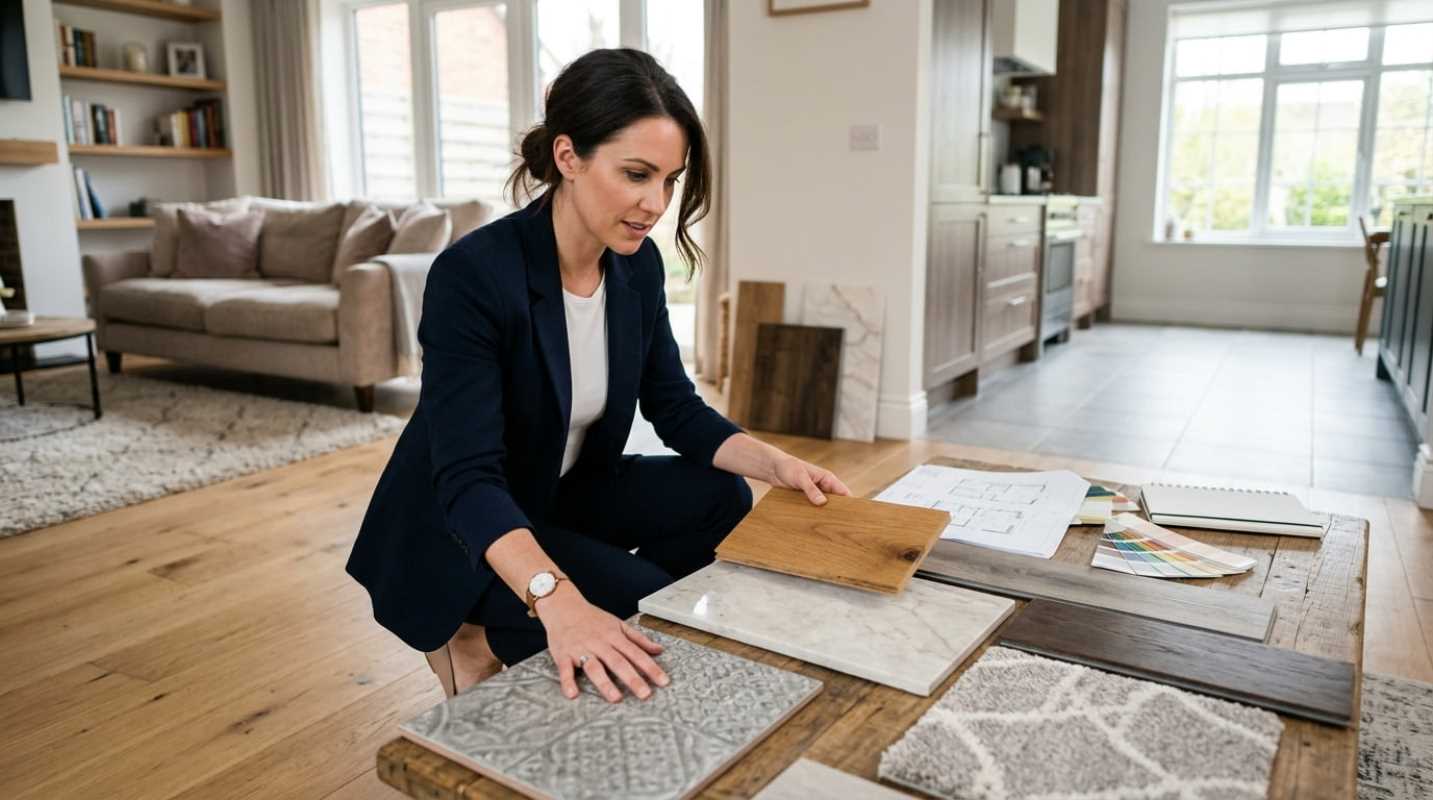
• Porcelain tile or waterproof vinyl: Brick-patterned porcelain tile offers historic texture without soaking up water or salt. If you prefer a softer, budget-friendly surface underfoot, luxury vinyl plank with a 20-mil wear layer handles pet claws and soaking wet boots with zero water damage.
• Protective wall millwork: Backpacks and wet jackets scuff bare drywall constantly. Installing vertical shiplap, beadboard, or board-and-batten wainscoting up to chair-rail height protects your walls from daily dings. Coat the woodwork in a satin or semi-gloss finish so mud wipes right off.
• Scuff-resistant paint: If wood paneling is not an option, skip standard flat paint. Choose a scrubbable matte or eggshell formula specifically designed to resist marks from shoes and heavy outerwear.
• Washable low-pile rugs: Thick rugs catch on the bottom of opening doors and trap dirt deep in their fibers. Choose a low-profile, flat-weave runner with a slip-resistant rubber backing that you can toss directly into the washing machine. Leave 4 to 6 inches of bare floor showing along the edges to frame the hallway properly.
The Finishing Touches for Lighting and Flow
Even the best storage plan fails if the layout blocks daily movement. Hallway pathways require specific dimensions to prevent bottlenecks during hectic morning routines.
A minimum walkway width of 36 inches is necessary for standard movement, but 42 to 48 inches is ideal if you want two people to comfortably cross paths without squeezing past each other.¹⁰ Measure your furniture depth carefully before buying anything new.
Lighting also plays a major role in how the space feels. Harsh overhead can cast dark shadows and make an entry feel stark. Add soft, layered light instead. A shaded wall sconce, a small accent lamp on a floating shelf, or a hidden LED strip under a floating cabinet creates a warm, welcoming glow when you walk in at night.
Finally, hang an oversized mirror with its center point roughly 58 to 65 inches off the floor. The glass bounces natural daylight from adjacent rooms into darker foyers, while giving you an easy spot for a quick outfit check before heading out the door.
Building Habits That Last
Setting up an organized entry gives you a solid system, but daily habits keep it running smoothly. Even the most thoughtfully designed drop zone will fail if you let items pile up for weeks at a time.
Adopt a simple two-minute reset every evening. Hang the loose jackets, drop your keys into their designated bowl, and tuck stray shoes into their cabinet. When you wake up, your front entrance is clear and ready to support another busy day.
Sources:
1. Entryway Design Trends 2025: Best & Worst
https://www.housedigest.com/1769004/entryway-design-trends-2025-best-worst/
2. Entryway Design Trends: First Impressions That Set the Tone for the Entire Home
https://rimrockrealestate.ca/blog/entryway-design-trends-first-impressions-that-set-the-tone-for-the-entire-home
3. Key Entryway Dimensions for Homes Large and Small
https://www.houzz.com/magazine/key-entryway-dimensions-for-homes-large-and-small-stsetivw-vs~25890082